2026-10-09 04:06:34
Krishna 3D Models for CNC and 3D Printing: Designs & Uses
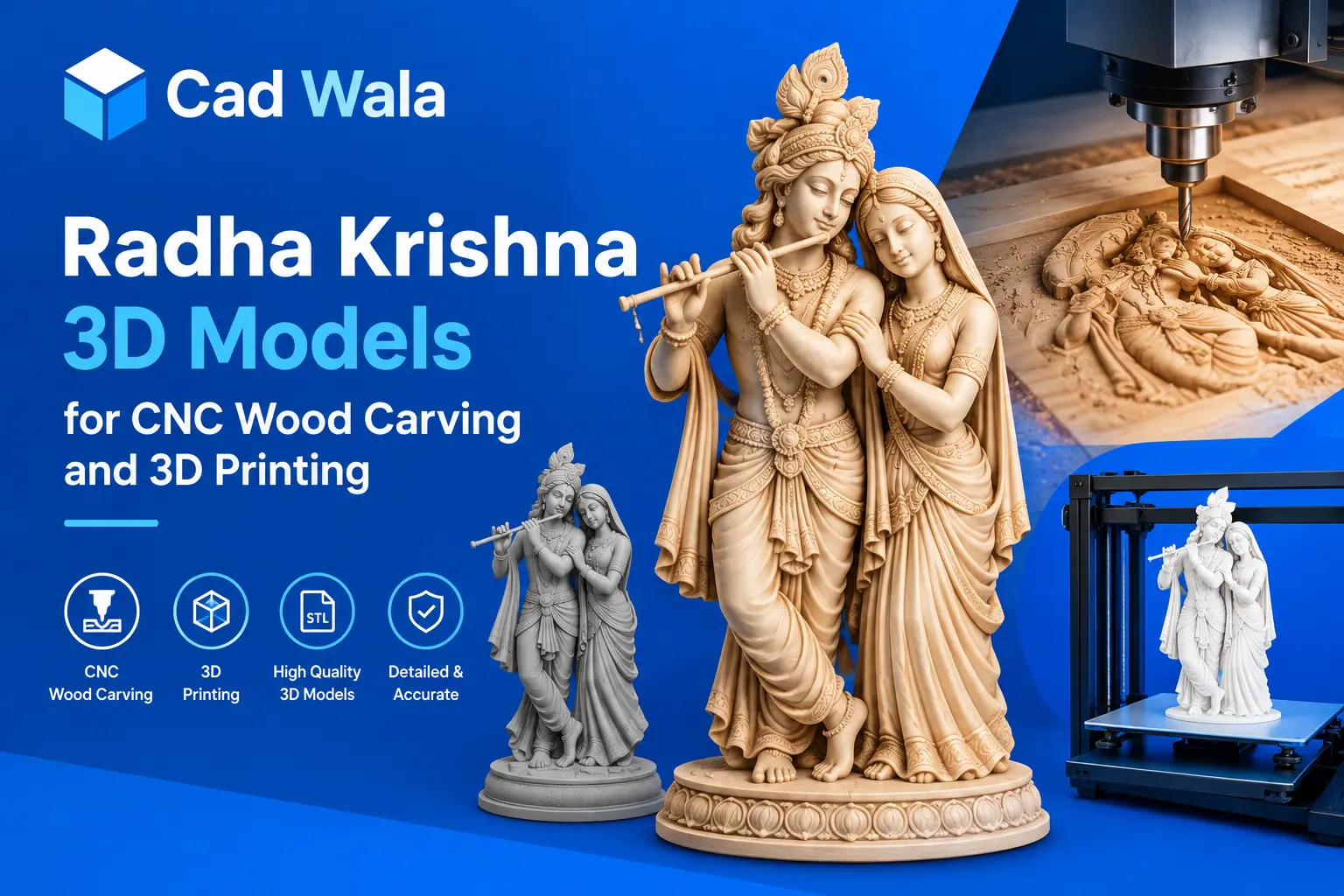
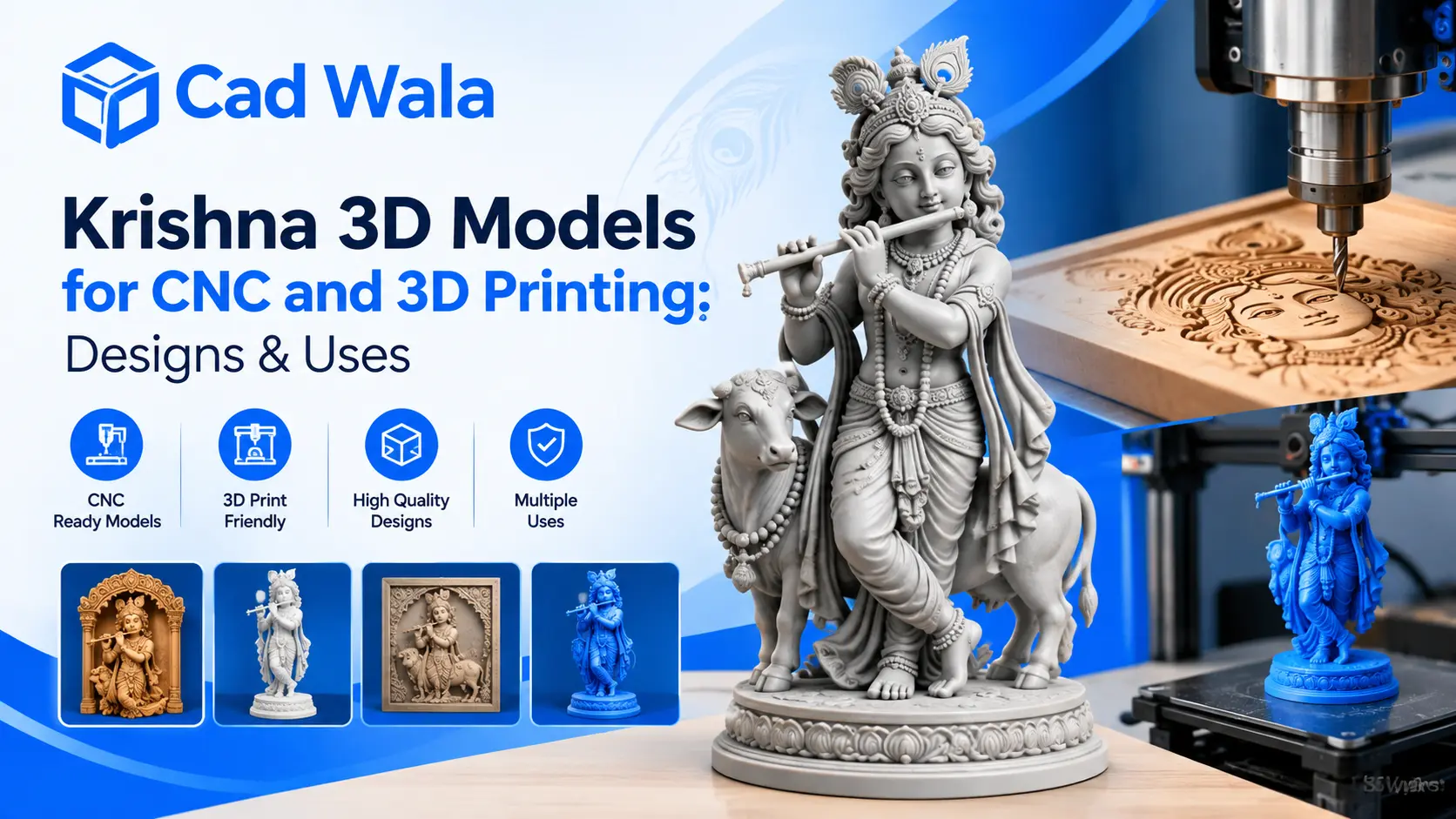
Krishna 3D Models are becoming a popular choice for artists, CNC designers, 3D printing enthusiasts, temple decorators, and people who want to create detailed representations of Lord Krishna. With modern digital modeling, a traditional religious design can now be turned into a beautiful carving, wall panel, statue, decorative piece, or 3D-printed artwork.
Imagine having a detailed image of Lord Krishna on your computer and then watching that design slowly come to life on a CNC machine or 3D printer. The flute, crown, peacock feather, clothing, and facial details can all be carefully shaped according to the purpose of the final artwork. This combination of traditional Indian art and modern technology gives designers many new ways to create Krishna-inspired pieces.
What Are Krishna 3D Models?
A Krishna 3D model is a digital three-dimensional design based on Lord Krishna. Unlike a simple 2D image, a 3D model contains depth, curves, raised surfaces, and other details that can be used to create a physical object.
These models can be prepared for different applications. A designer may use one model for CNC wood carving, another for stone or MDF engraving, and another specially prepared for 3D printing. The final result depends on the design, material, machine, and level of detail required.
For example, a detailed Krishna face may work beautifully as a wall carving, while a complete standing Krishna figure may be better suited to 3D printing. Choosing the right model before starting production can save both time and material.
Krishna 3D Model for CNC: Turning Digital Art Into Carving
A Krishna 3D model for CNC is created with machine carving in mind. CNC routers can follow digital toolpaths and remove material from wood, MDF, acrylic, foam, stone, or other suitable materials.
One of the biggest advantages of CNC carving is the ability to reproduce the same design several times. This is useful for workshops and manufacturers producing decorative panels, doors, pooja room artwork, furniture details, or temple elements.
A well-prepared model should have clean surfaces and suitable depth. Extremely complicated details may not always produce the desired result, especially when the material or cutting tool cannot reproduce very small features.
For a beautiful result, designers normally consider the size of the finished panel, material thickness, cutting depth, tool size, and required finishing work before sending the design to the machine.
Krishna 3D Model for 3D Printing: Creating Detailed Figures
A Krishna 3D model for 3D printing offers a different approach. Instead of removing material from a block, a 3D printer builds the object layer by layer.
This makes 3D printing useful for creating statues, figurines, decorative idols, miniature temple designs, display pieces, and customized artwork. Depending on the printer and material, designers can create both small decorative models and larger multi-part figures.
Before printing, the digital design may need to be checked for wall thickness, support requirements, overhangs, and the printer's capabilities. A model designed only for CNC carving may not automatically be suitable for 3D printing.
This is why it is important to choose a properly prepared Krishna 3D printing model rather than simply converting any image into a printable file.
Lord Krishna 3D Model for CNC Carving: What Makes a Good Design?
A Lord Krishna 3D model for CNC carving should balance artistic detail with practical machining requirements. A design may look impressive on a computer screen but still require changes before it can be carved successfully.
Important elements include facial depth, clothing folds, jewelry, the flute, crown, hair, and the famous peacock feather. These features can add character to the finished carving, but they need to be designed with enough separation and depth so that the CNC tool can reproduce them clearly.
For wall panels, relief-style designs are often useful because the main figure can stand out from the background. For deeper decorative carvings, additional layers can create a stronger three-dimensional appearance.
The choice of material also matters. Wood can give the artwork a warm and traditional appearance, while MDF may be practical for certain decorative projects. Stone and other hard materials require suitable machines and cutting tools.
Krishna 3D Models for Temple and Home Decoration
Many people use Krishna 3D models for religious and decorative spaces. A detailed Krishna design can become a central feature in a pooja room, temple entrance, wall panel, door, furniture, or decorative partition.
A Krishna temple 3D carving design can be especially useful when creating traditional-looking architectural details. Designers can combine Krishna figures with floral patterns, decorative borders, arches, lotus motifs, and other elements commonly found in Indian temple art.
For home interiors, smaller wall panels or framed carvings can create a spiritual focal point without requiring a large statue. The same concept can also be adapted for offices, cultural centers, hotels, restaurants, and other spaces that use Indian-inspired interior decoration.
Choosing the Right Krishna 3D Model
Choosing the right model depends mainly on what you want to create. Before downloading or purchasing a design, think about the final size, material, machine, and finishing method.
If your goal is CNC carving, look for a model prepared for relief carving or the specific type of machining you plan to use. If you are working with a 3D printer, choose a model designed with printable geometry in mind.
You should also check the file format. Different CNC software and 3D printing programs support different formats, so compatibility can prevent unnecessary conversion problems.
Another important point is scale. A model with fine details may look excellent at a large size but lose some features when reduced. Similarly, a small model may require simplified details to print or carve properly.
Popular Design Ideas Using Krishna 3D Models
There are many ways to use Krishna 3D models beyond traditional statues. A designer can create a Krishna wall panel for a home, a decorative pooja room frame, a carved wooden door, a temple backdrop, or a personalized gift.
For CNC work, raised relief panels are a popular option. A central Krishna figure surrounded by ornamental patterns can create a rich visual effect.
For 3D printing, designers can experiment with standing figures, flute-playing poses, miniature idols, decorative busts, and artistic interpretations. Different materials and finishing techniques can also change the final appearance.
A Krishna 3D printing model can also be scaled to suit different projects. A small model may be suitable for a shelf or personal collection, while a larger design can become a prominent decorative piece.
How Modern Technology Supports Traditional Krishna Art
Traditional Indian religious art often requires patience and skilled craftsmanship. Modern digital tools do not replace that artistic value; instead, they provide another way to reproduce and customize designs.
With Krishna 3D models, a designer can adjust size, depth, proportions, and certain decorative elements before production. This allows the artwork to be tested digitally before material is used.
CNC machines and 3D printers can also help reproduce a design consistently. This is particularly useful for artists, workshops, architects, interior designers, and manufacturers who need multiple copies of the same design.
At the same time, the finishing stage remains important. Sanding, polishing, painting, staining, or other finishing techniques can give the final piece its desired character.
Final Thoughts
Krishna 3D models bring together traditional devotional artwork and modern digital manufacturing. Whether you want a CNC-carved wooden panel, a temple decoration, a 3D-printed figure, or a personalized home décor piece, the right digital model can make the project much easier to plan.
The most important step is to choose a model that matches your intended machine, material, size, and final use. A properly prepared design can preserve important details while also making production more practical.
For artists and manufacturers, this technology opens up many possibilities. For individuals, it offers a creative way to bring a meaningful representation of Lord Krishna into physical form. With careful design and finishing, a digital model can become a lasting piece of devotional or decorative art.
Frequently Asked Questions
1. What is a Krishna 3D model used for?
A Krishna 3D model can be used to create statues, wall panels, decorative artwork, temple elements, CNC carvings, and 3D-printed figures. The exact use depends on the model's design, file format, size, and intended production method.
2. Can I use a Krishna 3D model for CNC carving?
Yes, a Krishna 3D model for CNC can be used to create detailed relief carvings and decorative panels. The model should be suitable for CNC machining and have appropriate depth and geometry for the selected material and cutting tools.
3. What should I look for in a Lord Krishna 3D model for CNC carving?
When selecting a Lord Krishna 3D model for CNC carving, check the design depth, level of detail, file compatibility, final size, and material requirements. A properly prepared model can help produce cleaner and more accurate carvings.
4. Is a Krishna 3D printing model suitable for making statues?
Yes, a Krishna 3D printing model can be used to create statues, figurines, decorative pieces, and other objects. Before printing, make sure the model is suitable for your printer and check details such as wall thickness, supports, scale, and overall geometry.
5. Where can a Krishna temple 3D carving design be used?
A Krishna temple 3D carving design can be used for temple walls, entrance panels, pooja rooms, decorative doors, backdrops, and architectural features. It can also be combined with floral borders and traditional Indian motifs for a more detailed appearance.