2026-10-14 03:43:09
Narasimha 3D Models Popular Designs for CNC Carving & 3D Printing
Narasimha 3D Models: Popular Designs for CNC Carving & 3D Printing
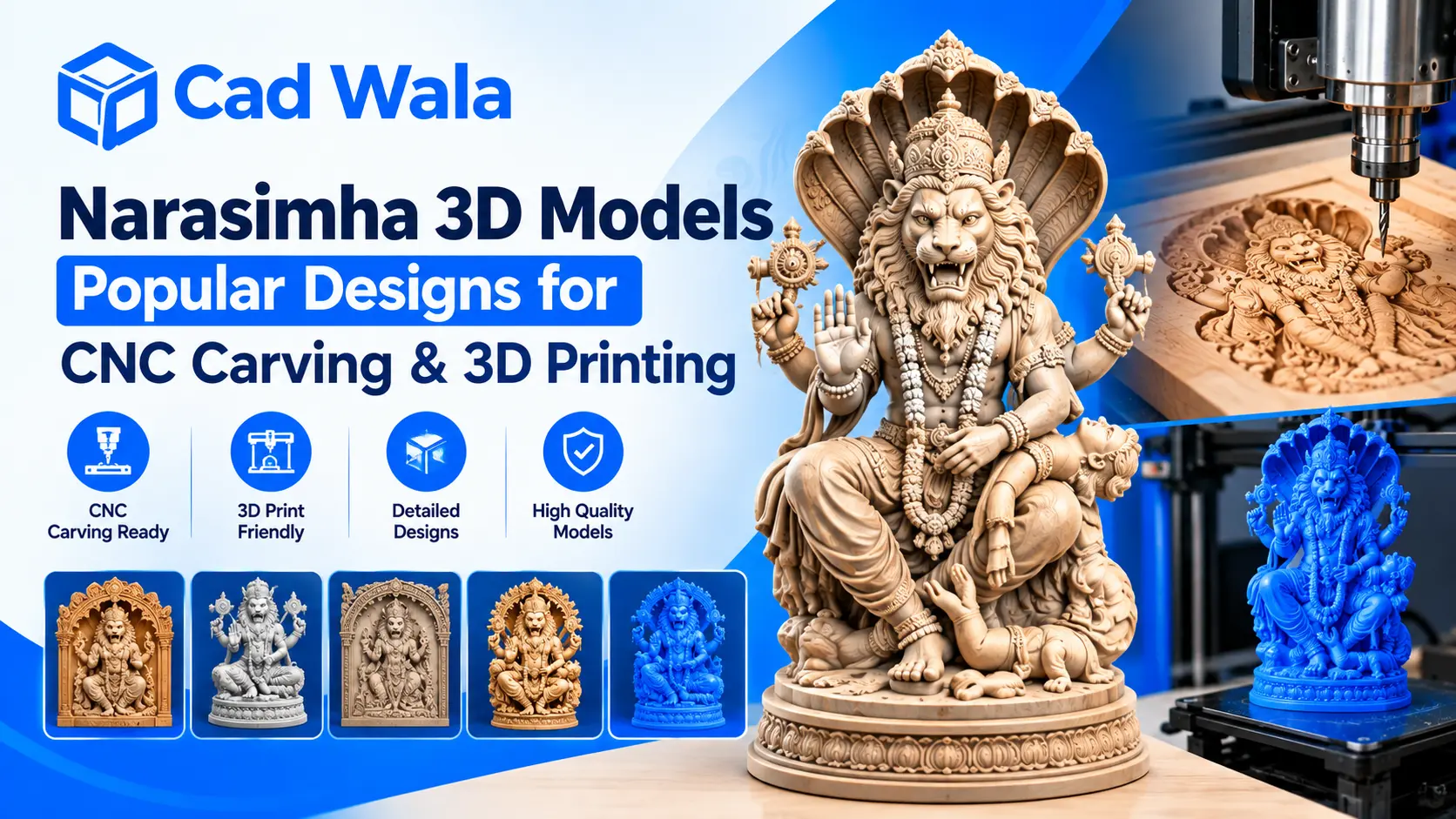
Narasimha 3D Models are a popular choice for creating detailed religious sculptures, decorative panels, temple artwork, and spiritual designs using CNC carving and 3D printing. Lord Narasimha, the powerful avatar of Lord Vishnu, is widely respected for protecting his devotees and defeating evil. His traditional appearance, with a lion's face and a human body, makes his form especially interesting for artists, sculptors, designers, and manufacturers.
Imagine a craftsman planning a beautiful Narasimha sculpture for a home temple. Before carving wood or preparing a 3D print, the designer needs a model that captures the deity's facial expression, ornaments, posture, and traditional details. A well-designed digital model makes this process easier and helps turn an artistic idea into a finished piece.
Whether you want to create a wooden wall panel, a decorative statue, or a detailed devotional model, understanding the available designs can help you choose the right option for your project.
What Makes Narasimha 3D Models Popular?
Narasimha designs combine religious meaning with detailed artistic features. The lion-like face, expressive eyes, flowing mane, traditional ornaments, and powerful posture give artists many opportunities to create distinctive sculptures.
Digital models also make it easier to prepare artwork for different production methods. A single design concept can be adapted for a small decorative piece, a larger wall panel, or a sculpture, provided the model is suitable for the intended manufacturing process.
Here are some common reasons people choose these designs:
- Detailed religious artwork: Capture facial features, ornaments, clothing, and traditional poses.
- Custom CNC carving: Create decorative designs on wood and other compatible materials.
- 3D printing projects: Produce physical models for display, painting, or further finishing.
- Temple and home decoration: Make devotional artwork for suitable interior spaces.
- Flexible design options: Adjust scale and certain design features to suit different projects.
The best results come from selecting a model that balances traditional appearance, artistic detail, and practical manufacturing requirements.
Popular Narasimha 3D Model Designs
Different projects need different styles. A detailed statue may look beautiful on a display shelf, while a relief design may work better on a wooden door, wall panel, or decorative frame.
1. Lord Narasimha Face Design
A Narasimha face design focuses on the deity's lion-like facial features, expressive eyes, mane, and ornaments. It is a suitable option for projects where the face is the main visual element.
Designers often use this style for wall decorations, wooden plaques, framed artwork, and decorative panels. The depth of the mane and the shape of the facial features should be considered carefully before manufacturing.
For CNC carving, clear depth levels help distinguish the face from the background. For 3D printing, the designer should check fine details and narrow sections to ensure they can be reproduced at the chosen size.
2. Ugra Narasimha Sculpture
Ugra Narasimha represents the fierce form of Lord Narasimha. Designs in this style often feature an intense expression, a strong posture, and intricate ornaments.
These models may be suitable for detailed statues, devotional displays, and larger artistic projects. However, the model must be designed with the production method in mind. Very thin ornaments or deep undercuts may require extra preparation for CNC machining or additional support during 3D printing.
When choosing this style, look for a design that preserves the traditional character without making the smaller details unnecessarily difficult to manufacture.
3. Lakshmi Narasimha Design
Lakshmi Narasimha depicts Lord Narasimha with Goddess Lakshmi. This design is often chosen for devotional artwork because it combines detailed ornamentation with a peaceful and balanced composition.
It can be used for decorative wall panels, framed reliefs, and sculptures, depending on the model's structure. Symmetry, clear separation between the figures, and carefully designed ornaments are especially important.
For CNC carving, a relief version may be easier to produce than a model containing many deep, hidden areas. For 3D printing, check that the figures and decorative elements are connected properly where required.
4. Narasimha Sitting Pose
A sitting Narasimha design is a versatile option for both traditional and contemporary devotional projects. Depending on the artwork, the deity may appear in a calm, powerful, or protective posture.
This style can work well for small display statues, larger sculptures, and decorative panels. Before selecting a model, consider the final dimensions and how much space is available for the base, ornaments, and surrounding details.
A strong base and balanced proportions can also make the finished sculpture easier to display.
5. Narasimha Relief Panel for Wood Carving
Relief panels are particularly useful when the goal is to create artwork on a relatively flat surface. Instead of producing a fully three-dimensional statue, the design uses different heights to bring the deity's features forward from the background.
These panels are popular choices for CNC wood carving because the carving tool can follow the model's surface to create visible depth and texture.
For the best results, select a model with clearly defined foreground and background areas. Avoid excessive fine detail if the panel will be carved at a small size.
How to Choose a Narasimha 3D Printing Model
A suitable Narasimha 3D printing model should match the printer, material, intended size, and final use. A model created for a large CNC-carved panel may not be ready for direct 3D printing without changes.
Before starting, check these important points:
- Model dimensions: Confirm that the design fits within the printer's build area or the available display space.
- Mesh quality: Look for a clean, complete model without unwanted holes, overlapping surfaces, or damaged geometry.
- Fine details: Make sure facial features, jewelry, and decorative elements remain visible at the intended printing size.
- Wall thickness: Thin sections may break during printing or finishing. The model may need reinforcement.
- Support requirements: Complex shapes and overhanging ornaments may require printing supports, depending on the printer and orientation.
- Material selection: PLA may suit decorative prototypes and display models, while other materials may be preferable for specific strength, heat, or finishing requirements.
It is also useful to test-print a small version before producing a larger sculpture. This allows you to inspect the face, surface quality, and overall proportions before investing more time and material.
Finding the Right Lord Narasimha STL File for 3D Printing
An STL file represents a three-dimensional surface as a mesh of triangles. It is commonly used to transfer a model into slicing software for preparing a 3D print.
When searching for a Lord Narasimha STL file for 3D printing, check more than the preview image. A visually attractive model may still contain geometry problems that affect the finished result.
Review the following details before using a file:
- Confirm that the file opens correctly in your preferred 3D software.
- Check whether the model is a complete statue or a relief panel.
- Review the polygon detail and overall mesh quality.
- Confirm that the file can be used for your intended purpose under its licence.
- Check whether the model requires editing, scaling, or repair before printing.
If you plan to sell the finished statues, verify the commercial-use terms. Permission to download a file does not automatically mean you can use it for commercial production.
A clean, manufacturing-ready model can save time during preparation and reduce avoidable printing problems.
Best Narasimha Designs for CNC Carving
Choosing the best Narasimha designs for CNC carving begins with the material and the type of finished product you want to create. A wooden temple panel, a decorative door insert, and a standalone sculpture have different design requirements.
For wood carving, relief models with clear depth variations are often practical. They allow the CNC machine to create recognizable features without requiring the same machining access as a fully three-dimensional sculpture.
Consider these design features when selecting a model:
- Clear depth levels: The face, ornaments, and background should be separated enough to remain visible after carving.
- Suitable tool access: Deep recesses and narrow gaps may be difficult to machine with larger cutting tools.
- Appropriate surface detail: Intricate patterns look attractive, but too much fine detail can disappear when the design is scaled down.
- Material compatibility: Hardwood, MDF, and other carving materials behave differently. Choose suitable cutting settings and model dimensions for the material.
- Finishing allowance: Sanding, polishing, painting, or applying a protective finish may soften some fine details.
For a first project, a well-defined Narasimha face or a medium-detail relief panel can be a sensible starting point. Experienced CNC operators may prefer more complex designs when their equipment, tooling, and finishing process can reproduce the details accurately.
How to Select a Reliable Narasimha 3D Model Manufacturer
If you need models for regular production, working with a suitable Narasimha 3D model manufacturer can help you obtain designs that match your manufacturing requirements.
Do not judge a supplier only by the appearance of its online previews. Ask whether the model is designed for CNC carving, 3D printing, or both. These processes have different technical needs, and a file suitable for one method may require adjustments for the other.
Before placing an order, consider asking about:
- Available design styles and customization options.
- Supported file formats, such as STL or other compatible 3D formats.
- Model dimensions, mesh quality, and manufacturing readiness.
- Commercial licensing and reproduction rights.
- Sample files or previews, where available.
- Revision support if the model needs changes.
If you are producing several pieces, consistency is particularly important. A properly prepared model can help maintain similar proportions and details across multiple finished products.
Conclusion
Narasimha 3D Models offer artists, designers, and manufacturers many ways to create meaningful devotional artwork. From detailed lion-faced portraits and powerful Ugra Narasimha sculptures to Lakshmi Narasimha figures and CNC-carved relief panels, each style has its own visual appeal and production requirements.
The right choice depends on your project, material, manufacturing equipment, and desired level of detail. Before beginning, review the model's quality, dimensions, compatibility, and usage rights. A little preparation can help you avoid unnecessary rework and produce a cleaner finished design.
Whether you are planning a single decorative sculpture or a series of custom carvings, choosing a model designed for your intended process is the first step toward achieving a result that looks detailed, balanced, and true to the artistic vision.
Frequently Asked Questions
1. Where can I find Narasimha 3D Models for CNC carving?
You can explore 3D model libraries, specialist design websites, and providers that create religious sculptures and CNC-ready reliefs. Check the file format, carving compatibility, level of detail, and licence before selecting a design.
2. What should I check before using a Narasimha 3D printing model?
Check the model's dimensions, mesh quality, wall thickness, and fine details. Also confirm that the file is compatible with your slicing software and that any required repairs or printing supports have been considered.
3. How do I choose a Narasimha 3D model manufacturer?
Look for a provider with relevant design experience, clear file specifications, customization options, and transparent licensing terms. If possible, review a sample model before committing to a larger project.
4. What is a Lord Narasimha STL file for 3D printing?
It is a digital file that describes the surface geometry of a three-dimensional Narasimha design. Slicing software uses the model to prepare printing instructions, although some STL files may need repair or adjustment before printing.
5. Which are the best Narasimha designs for CNC carving?
Narasimha face reliefs, Lakshmi Narasimha panels, and seated deity designs can all work well, depending on the project. Choose a model with clear depth levels, suitable tool access, and details that remain visible at the final carving size.