2026-09-15 06:36:36
How to Prepare a Religious 3D Model for Jewelry Manufacturing
A religious jewelry 3D model helps turn a meaningful spiritual design into a real pendant, ring, bracelet, or other jewelry piece. Imagine you have a beautiful idea for a Lord Ganesha pendant or a Hanuman devotional piece. Before that design can become a physical piece of jewelry, it needs to be carefully prepared as a digital 3D model.
A good 3D model does more than make the design look attractive on a computer screen. It must also be suitable for printing, casting, polishing, stone setting, and final jewelry production. Even a small mistake in the model can create problems during manufacturing.
Whether you are a jewelry designer, manufacturer, CAD artist, or someone creating a custom religious pendant, understanding the preparation process can help you get a better final result.
Start With a Clear Religious Jewelry 3D Model Design
The first step is to have a clear idea of what you want to create. A religious design may include a deity, sacred symbol, temple element, or traditional pattern. Since these designs often contain many small details, the reference image should be clear and easy to study.
For example, if you want to create a pendant featuring Lord Krishna, the designer needs to understand the shape of the face, clothing, ornaments, posture, and other important features. A blurry reference image can make it difficult to create accurate details.
At this stage, decide the type of jewelry you want to manufacture. A small pendant will require different proportions from a large decorative piece. The intended size should be discussed before the CAD work begins.
It is also useful to decide where the jewelry will be worn and how it will be used. A daily-wear pendant may need stronger and simpler details, while a special devotional piece can have more decorative elements.
Create the Basic Shape in CAD
Once the reference is ready, the designer begins building the digital model using jewelry CAD software. The basic shape is created first, followed by the finer details.
A professional devotional jewelry CAD design should balance appearance with manufacturing requirements. The designer should not focus only on making the model beautiful. Every surface, curve, opening, and connection should have a practical purpose.
For a pendant, the outer shape, bail, thickness, and attachment points need careful attention. If the bail is too thin or poorly connected, it may become weak during production or everyday use.
The same principle applies to religious rings and other jewelry. A design that looks perfect on a computer can still create problems if it does not have enough structural strength.
Add Fine Details Carefully
Religious jewelry often depends on small details to capture the identity of a deity or sacred symbol. Facial features, clothing patterns, crowns, weapons, ornaments, and other elements may all be important.
However, adding too much detail can sometimes make manufacturing difficult. Very thin lines or extremely small decorative elements may disappear during casting or become damaged during finishing.
A skilled designer therefore checks each detail based on the final jewelry size. Details that look impressive when the model is enlarged on a computer screen may not remain visible when the actual pendant is only a few centimeters in size.
This is particularly important when creating a Hindu god CAD model. Traditional religious designs can contain intricate features, so the designer needs to know which details should remain prominent and which ones can be simplified.
Prepare the Pendant CAD File for Manufacturing
After the main design is complete, the next step is preparing the pendant CAD file for production. The file should represent a clean and properly constructed 3D object.
The designer should check for unwanted gaps, overlapping surfaces, open areas, and other problems that could affect printing or casting. The thickness of important parts should also be reviewed.
The connection between different parts deserves special attention. For example, if a deity figure is attached to a decorative frame, the connection should be strong enough for manufacturing and regular use.
A properly prepared file saves time because the manufacturer does not have to repeatedly correct the design before production.
Check Thickness and Strength
One of the most important parts of preparing a religious jewelry 3D model is checking its thickness.
Jewelry cannot always be made as thin as a design shown on a screen. Extremely thin areas can become fragile, while very heavy sections can increase material use and production costs.
The right thickness depends on the jewelry type, material, size, and manufacturing process. A CAD designer should therefore consider how the piece will be cast and finished before finalizing the model.
For example, a pendant intended for regular use needs enough strength around the bail and other connecting areas. A decorative deity figure may also need stronger support around delicate parts such as hands, weapons, or ornaments.
Make the Model Suitable for 3D Printing
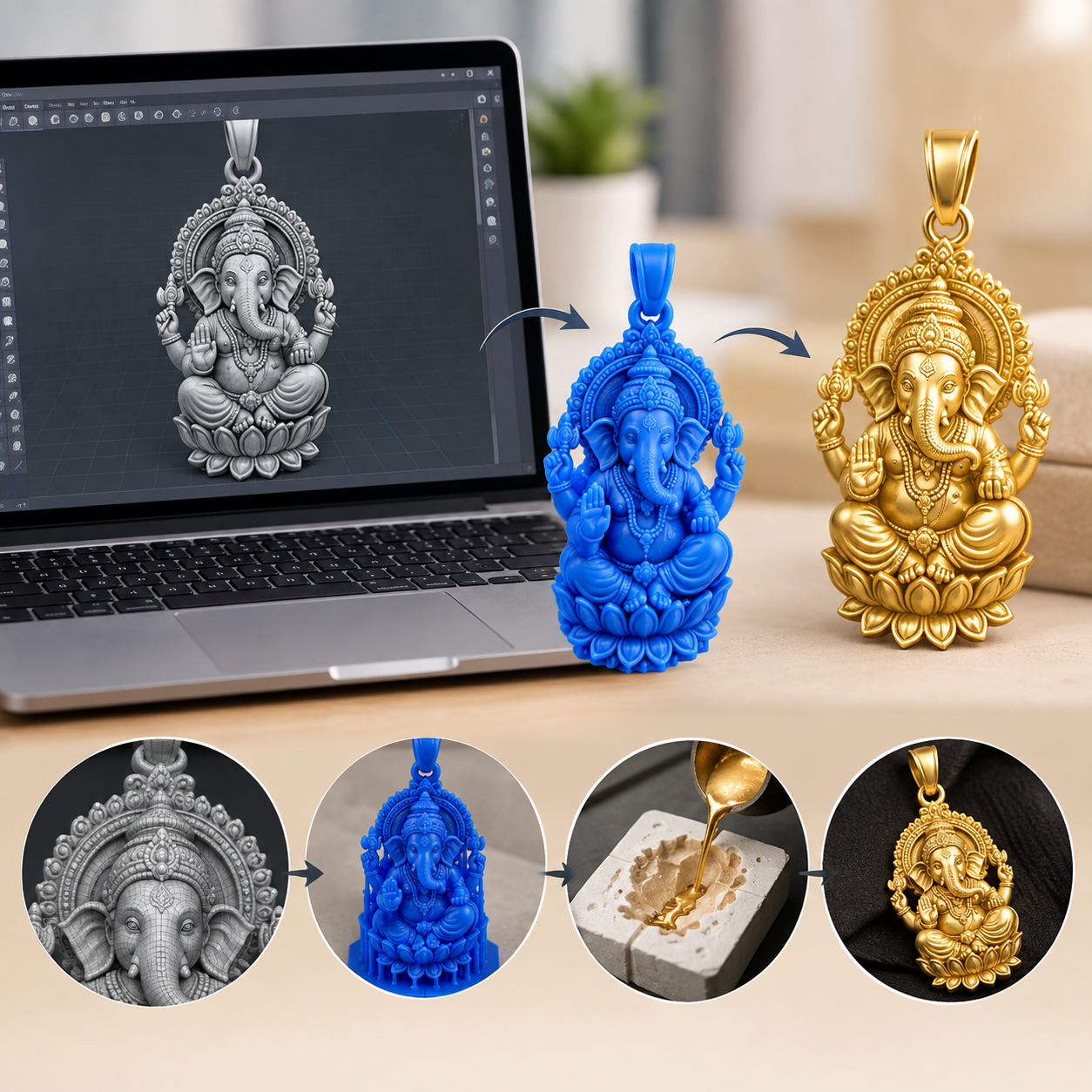
Before casting, many jewelry manufacturers create a physical wax or resin pattern using a 3D printer. This makes it important to prepare a reliable 3D printable jewelry model.
The model should be checked for printing problems before it is sent to the printer. The surfaces should be properly connected, and the design should contain the required geometry for the selected printing method.
The orientation of the model can also affect the printing result. Some small details may require additional support during printing, while certain areas may need to be adjusted to produce a cleaner pattern.
A test print can be useful for complex religious designs. It allows the designer and manufacturer to see whether the facial details, borders, ornaments, and other features are clear at the actual size.
Prepare the Jewelry Casting 3D Model
Once the printable version has been checked, the design can be prepared for casting. A jewelry casting 3D model needs to work with the selected casting process and material.
The manufacturer may review the model for wall thickness, delicate sections, connections, and areas where metal needs to flow properly during casting. Shrinkage and finishing requirements may also need to be considered.
This stage is important because the final metal piece will not look exactly like the digital model if manufacturing issues are ignored.
For precious-metal jewelry, even a small design problem can lead to material loss or additional finishing work. Checking the model carefully before production can reduce these risks.
Think About Polishing and Finishing
A religious jewelry 3D model should also be designed with the final finishing process in mind. Jewelry may be polished, buffed, textured, plated, oxidized, or given a combination of finishes.
Very narrow spaces can be difficult to polish. Deep details may hold finishing material or become less visible after polishing. The designer should therefore consider how each area will look after the piece leaves the casting stage.
For devotional jewelry, maintaining the important features of the religious figure is especially valuable. The face, hands, symbols, and other identifying details should remain clear after finishing.
Test the Design Before Final Production
Before producing a large batch, it is a good idea to test the model. A sample print or prototype can reveal issues that may not be obvious on the computer.
Look closely at the size, weight, thickness, attachment points, and small details. If something looks too thin or difficult to finish, it is better to correct the CAD model before casting multiple pieces.
This approach can save both time and money. It also gives the designer a chance to compare the physical result with the original concept.
Why Professional CAD Preparation Matters
Creating religious jewelry CAD files for 3D print is not only about converting an image into a 3D shape. The model needs to combine artistic detail with practical manufacturing knowledge.
A carefully prepared religious jewelry 3D model can make the production process smoother from CAD design to printing, casting, polishing, and final inspection. It also gives manufacturers greater control over the final appearance of the jewelry.
Whether you are developing a new devotional collection or creating one custom piece, spending enough time on the digital model can make a noticeable difference.
Final Thoughts
A meaningful religious jewelry design deserves careful preparation. From selecting a clear reference to building the CAD geometry, checking thickness, preparing the file for printing, and testing the final design, every stage matters.
A well-made Hindu god CAD model should be attractive, strong, printable, and ready for manufacturing. When the digital design is prepared correctly, your idea can move smoothly from a simple concept on a screen to a finished piece of devotional jewelry that people can wear and treasure.