2026-09-18 06:04:17
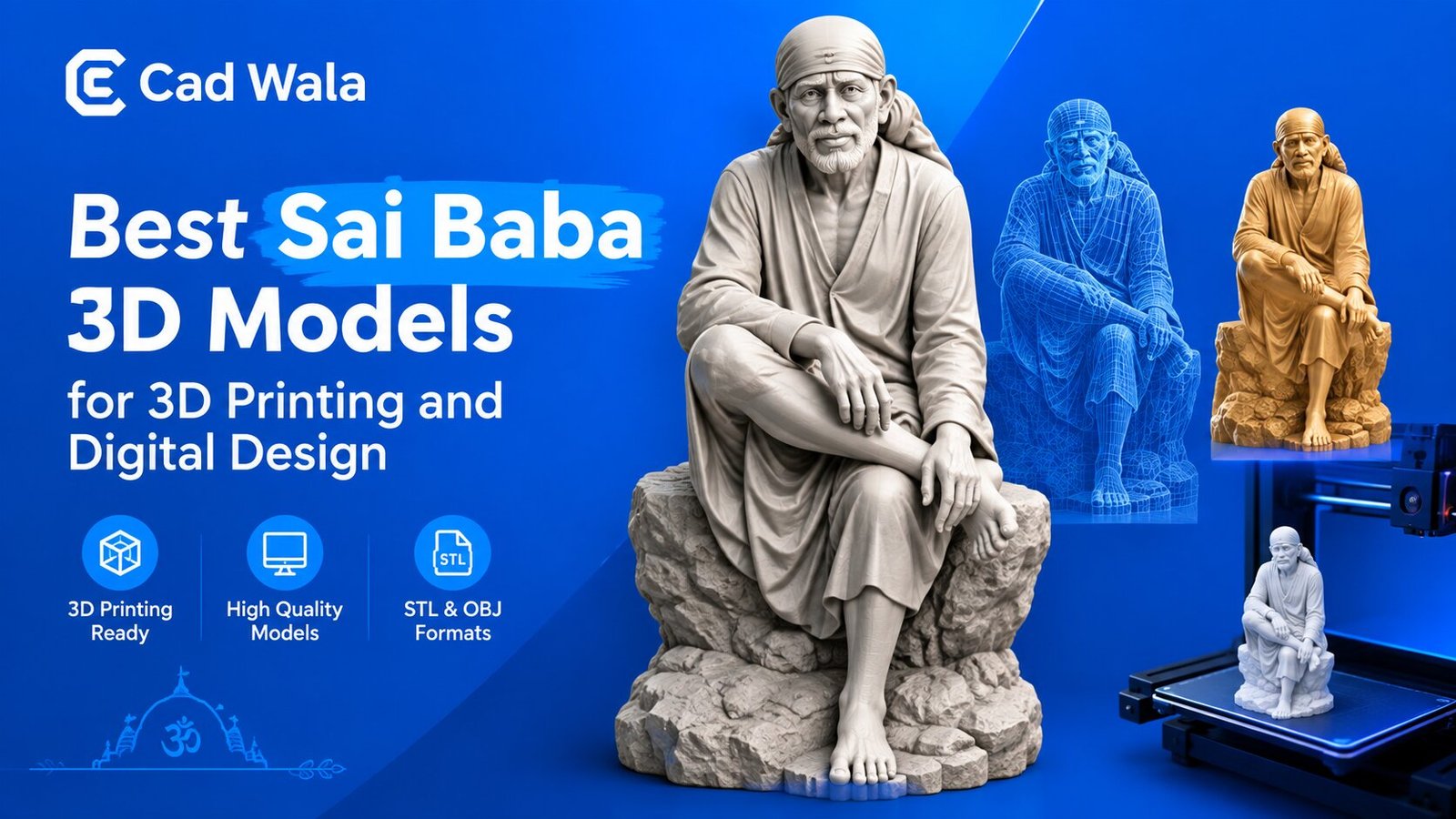
Best Sai Baba 3D Models for 3D Printing and Digital Design
Sai Baba 3D Models can make the process of creating a devotional statue, CNC carving, 3D-printed idol, or digital artwork much easier. Instead of creating every detail from the beginning, you can start with a carefully prepared digital model and adjust it according to your project.
For designers, manufacturers, artists, and 3D printing professionals, a good model is more than just a beautiful image. It should have clean details, proper proportions, and a format that works with the software and machines you use. Whether you want to create a small decorative idol or a larger statue, choosing the right model can save time and reduce unnecessary design work.
Why Sai Baba 3D Models Are Useful for Modern Design
Imagine that you have received an order for a Sai Baba statue. You know the basic pose and size the customer wants, but creating the entire figure from a blank screen could take many hours. This is where a ready-made digital model becomes useful.
With suitable Sai Baba 3D Models, you can begin with an existing structure and make changes where needed. You may resize the statue, adjust some details, prepare it for printing, or use parts of the design for another creative project.
These models are useful for several types of work, including:
- 3D printing
- CNC carving
- Digital sculpture
- Decorative statue production
- Resin casting preparation
- Product visualization
- Religious artwork
- Manufacturing prototypes
The model you select should match the final purpose. A model designed for visual presentation may not be suitable for direct manufacturing. Always check the geometry and file specifications before starting production.
Choosing a Sai Baba 3D Printing Model
A Sai Baba 3D Printing Model needs to be prepared with the printing process in mind. A model may look excellent on a computer screen but still create problems when you send it to a printer.
For example, very thin sections can become weak during printing. Small unsupported details may also require additional supports. If the model has open surfaces, overlapping geometry, or other technical issues, the slicing software may not produce the expected result.
Before printing, check the model for:
- Closed and clean geometry
- Suitable wall thickness
- Correct scale
- Proper surface details
- Printable overhangs
- Correct file orientation
- Compatibility with your slicing software
You should also think about the material you are using. A small resin print can capture fine facial and clothing details, while a larger filament print may require different settings and structural planning.
Sai Baba 3D Statue Model for Different Projects
A Sai Baba 3D Statue Model can be used for both artistic and practical projects. A designer may want to create a traditional seated figure, while a manufacturer may need a larger statue for further production.
The size of the final statue can change how the model should be prepared. A design that works well at 10 cm may need additional attention when enlarged to one metre or more. Fine details that look clear at a small size may need to be strengthened or simplified for manufacturing.
You can also modify the model based on your customer's requirements. The pose, base, overall height, or decorative elements can sometimes be adjusted before production, depending on how the original model was created.
This flexibility makes digital statue models valuable for people who regularly work on custom religious sculptures.
How Sai Baba 3D Design Helps Designers
A good Sai Baba 3D Design gives you a digital starting point before you move into physical production. This is especially helpful when the project involves detailed clothing, facial features, hand positions, or decorative elements. A well-prepared 3D model helps you understand how these small details will look before the actual manufacturing process begins. It can also make it easier to plan the overall size, shape, and structure of the statue.
Digital design also allows you to view the statue from different angles. You can inspect the front, side, and rear portions before spending money on material or machine time. This gives you a clearer idea of how the complete statue will look instead of depending only on one front-facing view. Designers can zoom in on specific areas and check details that may not be easy to notice in a simple drawing or reference image.
For a manufacturer, this can be an important step. Finding an issue on the computer is generally easier than discovering it after a statue has already been carved or printed. If something looks uneven, too thin, too deep, or difficult to manufacture, the designer can make changes to the digital model before production starts. This can help reduce material waste, save machine time, and avoid unnecessary corrections during manufacturing.
Designers can also create different versions of the same model. For example, one version may be prepared for a small decorative piece, while another may be optimized for a larger manufacturing project. The model can be adjusted according to the required dimensions, level of detail, and production method. This flexibility is useful for CNC carving, 3D printing, casting, and other manufacturing processes.
What to Check in a Sai Baba STL File for 3D Printing
When you are looking for a Sai Baba STL File for 3D Printing, do not select a file only because the preview image looks attractive. The technical quality of the file is equally important. A model may look perfect in a preview but still have problems when you open it in your 3D printing or manufacturing software.
STL is commonly used to transfer 3D geometry to slicing and manufacturing software. However, not every STL file is created with the same level of care. Some files may have rough surfaces, missing details, unnecessary geometry, or other mesh issues that can affect the final result.
Before using a file, check whether the model has clean surfaces and whether the mesh is suitable for your intended process. Look for problems such as holes, overlapping surfaces, broken edges, or areas that are not properly connected. It is also useful to know the model's original dimensions and whether the file can be scaled without causing unexpected problems.
The level of detail is another important point to consider. If you want to create a Sai Baba statue, CNC carving, or a detailed 3D-printed model, make sure the STL file contains enough surface detail for the final size you have in mind. A model designed for a small print may not always produce the same quality when enlarged significantly.
A few minutes spent checking these details can prevent problems later. Choosing a well-made STL file from the beginning can make the printing, carving, or manufacturing process much smoother and help you achieve a cleaner final Sai Baba model.
Preparing Sai Baba 3D Models for CNC and Manufacturing
When the goal is physical production, Sai Baba 3D Models need to be considered from a manufacturing point of view. CNC carving, for example, requires more than an attractive 3D shape.
The model may need to be processed according to the machine, cutting tool, material, and desired level of detail. Wood, stone, foam, resin, and other materials each behave differently during production.
If you are preparing a model for CNC work, think about:
- The final dimensions of the statue.
- The material being carved.
- The size and type of cutting tools.
- The depth of important details.
- The required surface finish.
- Whether multiple machining passes are necessary.
This planning helps you move from a digital design to a physical object with fewer surprises.
Using a Sai Baba 3D Model for Manufacturing
A Sai Baba 3D Model for Manufacturing should be selected with the complete production process in mind. The final result depends not only on the digital sculpture but also on how that sculpture will be produced.
For example, a manufacturer making several identical statues may need a model that can be consistently reproduced. A workshop creating one custom piece may have more freedom to make manual changes after printing or carving.
The model can also serve as a reference for creating moulds, prototypes, decorative panels, or other products. When the digital file is properly prepared, it becomes a useful part of the production workflow rather than simply a visual asset.
For businesses, this can make communication easier too. A customer can review the digital design before production begins and request changes while the project is still at the design stage.
How to Select the Right Sai Baba 3D Models
There is no single model that is suitable for every project. Your choice should depend on what you want to make and how you plan to make it. Before downloading or purchasing a model, think about the final purpose and the type of equipment or software you will use. This simple step can save you time and prevent problems during the production process.
If your goal is 3D printing, focus on mesh quality, support requirements, scale, and printability. A model may look excellent on your screen but still need adjustments before it can be printed properly. Check whether the geometry is clean, whether the walls are thick enough, and whether the design contains areas that may need additional support.
If you are working with CNC equipment, pay closer attention to surface depth, tool access, and manufacturing requirements. The shape should be suitable for the cutting process, and small or deeply placed details should be checked carefully. A model designed mainly for viewing may not always work well for CNC carving or manufacturing without some changes.
For digital artwork, appearance and artistic detail may be your biggest priorities. In this case, you may want a model with detailed textures, smooth surfaces, and an attractive overall shape. The file format and compatibility with your preferred 3D software are also worth checking before you start working on the design.
For commercial manufacturing, technical accuracy and licensing become equally important. You need to make sure that the model can legally be used for your intended purpose, especially if you plan to sell finished products made from it. Checking the license terms in advance can help you avoid problems later.
It is also worth checking the level of detail before choosing a model. A highly detailed design can produce a beautiful result, but it may require more processing time, larger files, or more careful production. On the other hand, a simpler model can be easier to edit, scale, print, or manufacture.
Common Uses of Sai Baba 3D Models
Today, Sai Baba 3D Models can be used in many creative and manufacturing applications. A designer might use one to develop a devotional product, while a 3D printing business may use a model as the foundation for a physical idol.
Common applications include:
- Sai Baba idols and statues
- CNC-carved religious artwork
- 3D-printed devotional pieces
- Decorative wall panels
- Digital visualization
- Prototypes
- Custom statue development
- Manufacturing references
The important thing is to match the model with the intended application. A little planning before production can make the entire process smoother.
Final Thoughts
A well-prepared digital model can turn a complicated statue-making project into a much more manageable process. Whether you are a 3D artist, printer, CNC operator, designer, or manufacturer, the right Sai Baba 3D Models can give you a strong foundation for your work.
Before choosing a model, look beyond the preview image. Check the geometry, file format, level of detail, dimensions, licensing, and manufacturing requirements. When these details match your project, the model becomes much more useful.
For anyone working with devotional designs, 3D printing, CNC carving, or digital manufacturing, a carefully selected Sai Baba model can save design time while providing a practical starting point for creating a finished product.
Frequently Asked Questions
1. What should I check before using a Sai Baba 3D Printing Model?
Before using a Sai Baba 3D Printing Model, check that the mesh is clean, the surfaces are properly closed, and the details are suitable for your printer and material. You should also check the model's scale, wall thickness, support requirements, and file compatibility with your slicing software.
2. Can I resize a Sai Baba 3D Statue Model?
Yes, a Sai Baba 3D Statue Model can generally be scaled to suit different project sizes. However, resizing does not always mean every detail will remain practical. Very small features may become difficult to print, while enlarged models may require stronger structures or additional preparation.
3. What is a Sai Baba STL File for 3D Printing used for?
A Sai Baba STL File for 3D Printing contains the 3D geometry needed to prepare a model for many 3D printing workflows. The STL can be imported into suitable slicing software, where you can adjust size, orientation, supports, and other printing settings before production.
4. How can Sai Baba 3D Design help a manufacturer?
Sai Baba 3D Design gives manufacturers a digital reference that can be reviewed and adjusted before physical production. It can help with planning statue dimensions, checking details, preparing prototypes, and communicating the intended design before printing, carving, or other manufacturing work begins.
5. What makes a Sai Baba 3D Model for Manufacturing suitable for production?
A Sai Baba 3D Model for Manufacturing should have clean geometry, appropriate detail, correct proportions, and a structure that fits the planned production method. The material, machine, tool size, final dimensions, and required surface finish should all be considered before manufacturing starts.