2026-09-16 04:52:01
Saraswati 3D Models for CNC Carving and Manufacturing
Saraswati 3D Models for CNC Carving and Manufacturing
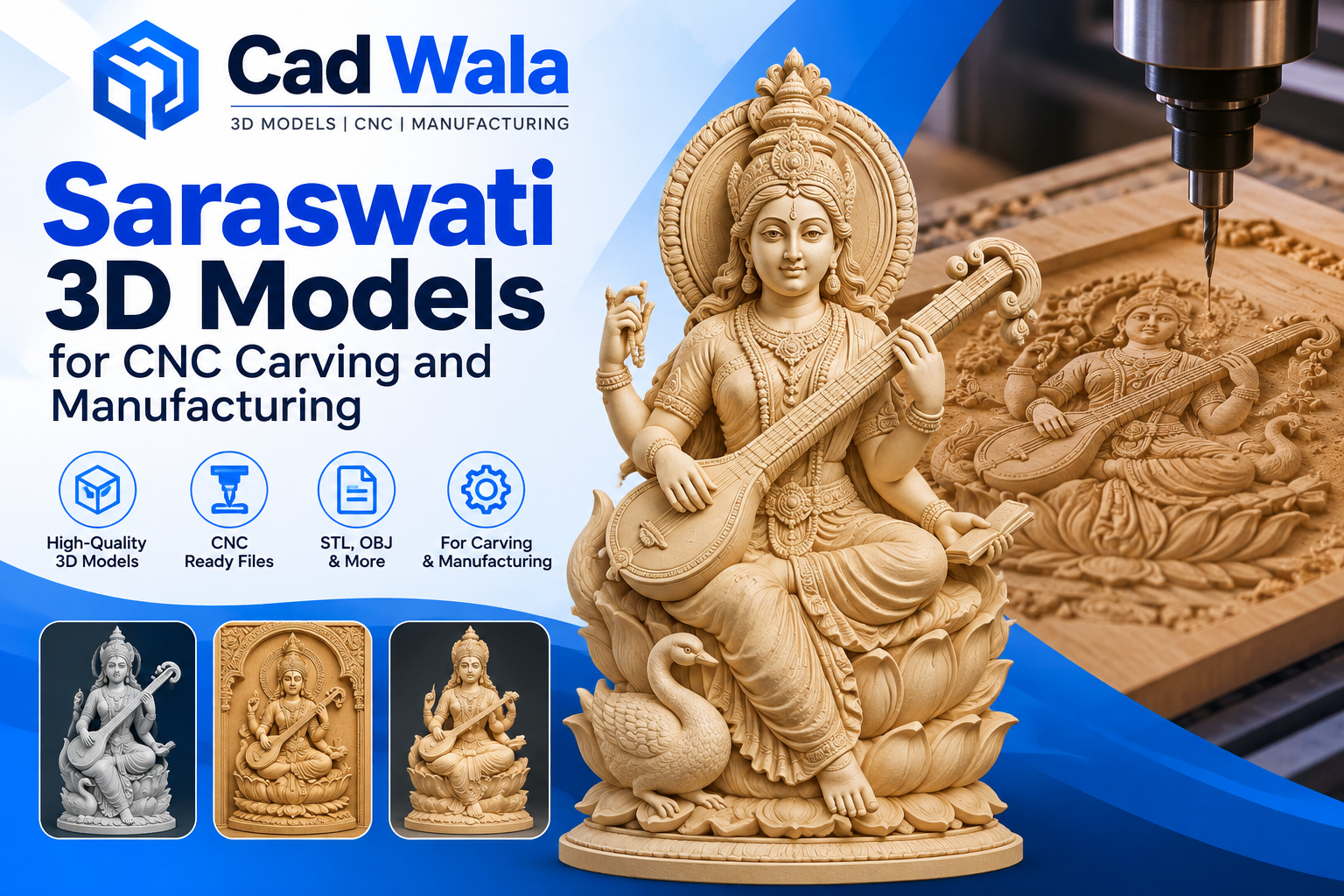
Saraswati 3D Models are useful for artists, CNC manufacturers, wood carvers, interior designers, and businesses that create decorative religious products. A detailed digital model of Goddess Saraswati can be turned into beautiful carvings, wall panels, temple decorations, statues, and other manufactured products with the help of modern CNC machines.
Imagine you are planning to create a wooden Saraswati carving for a temple, school, home, or cultural space. You may have a clear idea of how the final design should look, but creating that design by hand can take a lot of time. This is where a well-designed 3D model becomes useful. It gives you a digital version of the design that can be prepared for carving and manufacturing.
Why Saraswati 3D Models Are Useful for CNC Carving
Traditional carving requires skill, patience, and considerable working time. CNC technology has made the process more controlled and repeatable. However, the machine still needs an accurate digital design before it can begin cutting the material.
A good Saraswati 3D carving model provides the detailed shape required for this process. The model can include important features such as the face, hair, jewellery, clothing, hands, musical instrument, lotus, and other decorative elements.
For a manufacturer, this means the same design can be used to produce multiple pieces with consistent details. Instead of creating every design from the beginning, the digital file can become part of a repeatable production process.
The model can also be adjusted according to the size and material being used. Whether you are working with wood, MDF, stone, or another suitable material, the design can be prepared according to the requirements of the project.
Choosing the Right Saraswati Mata 3D Model
When searching for a Saraswati Mata 3D model, look beyond the overall appearance. A model may look attractive on a screen but still not be suitable for CNC work. Before choosing a design, think about how it will actually work during the carving process. A good-looking model is not always a practical model, especially when the design contains very small or complicated areas that may be difficult to cut accurately.
Pay attention to the depth, surface details, proportions, and overall structure of the model. These elements can make a big difference in the final carved product. Fine decorative details should be clearly defined without making the design unnecessarily difficult to carve. Details such as the jewelry, clothing, ornaments, veena, and other traditional elements should have enough depth to remain visible after carving. At the same time, the design should not contain too many tiny elements that could become unclear or damaged during CNC machining.
The face is another important part. Saraswati Mata is traditionally represented with a calm, peaceful, and graceful appearance. A well-created model should preserve this character while providing enough detail for the intended carving method. The facial features should be balanced and clear so that the final carving still looks natural when viewed from different angles. Small changes in the eyes, nose, lips, or overall facial shape can affect the appearance of the finished design, so these details should be checked carefully before selecting the model.
You should also check whether the model can be edited or resized for your project. A flexible digital design can save time when you need to create products in different dimensions. For example, the same Saraswati Mata 3D model may be used for a wall panel, wooden carving, decorative plaque, temple artwork, or other CNC projects. If the model can be scaled without losing important details, it becomes easier to adjust the design according to the size and material of the final product.
Saraswati 3D Carving Model for Decorative Projects
A Saraswati 3D carving model can be used for much more than a single statue. Manufacturers, artists, interior designers, and jewelry or woodcraft professionals can use the design to create decorative wall panels, doors, furniture elements, pooja room decorations, temple panels, nameplates, and artistic displays. The same basic model can often be adjusted in size and depth to suit different products and production requirements.
For example, a wooden panel featuring Goddess Saraswati can become a central decorative element in a school, music institution, library, or cultural space. The carving can highlight Saraswati with her veena and other traditional details, giving the panel a meaningful and artistic appearance. Similarly, a smaller carving can be used in a home prayer room, on a wooden cabinet, or as part of a decorative frame.
The level of relief can also change the appearance of the finished product. A shallow relief may be suitable for a decorative panel where the design needs to remain relatively flat, while a deeper relief can create a more prominent three-dimensional effect. The right depth depends on the material, machine capabilities, and the type of finished product being planned.
Before production, it is important to consider the available CNC machine, cutting tools, material thickness, and desired finishing quality. These factors can influence how much detail should be retained in the final model. Very fine details may look attractive on the digital design but may require smaller cutting tools, more machining time, and additional finishing work.
It is also helpful to check the model from different angles before sending it for production. This can help identify areas where the depth, curves, facial details, or small decorative elements may need adjustment. Taking these steps before machining can reduce production problems and help achieve a cleaner final carving.
Saraswati Idol 3D Model for Manufacturing
A Saraswati idol 3D model is particularly useful when the goal is to create a complete three-dimensional figure rather than a flat or relief carving. It gives the designer a clear view of the idol from different angles, making it easier to understand the overall shape, posture, proportions, and fine details of the design.
A digital idol model can help manufacturers understand the complete shape before production begins. This is valuable when working on statues with multiple details, including the veena, clothing, jewellery, lotus, and other traditional elements. Each part can be carefully designed and checked before the physical manufacturing process starts. This can help reduce design mistakes and make the final product closer to the original concept.
The digital model can also be scaled for different product requirements. A manufacturer may need a small decorative idol for a home or a larger statue for an institution or cultural space. Working from a digital model makes it easier to plan these variations without creating the entire design again from the beginning. The same basic model can be adjusted according to the required height, width, and overall size.
Another useful feature is the ability to make design changes before production. If the jewellery, veena, lotus, clothing details, or facial features need to be adjusted, these changes can be made to the digital model first. This gives manufacturers and designers an opportunity to review the design and make improvements before investing time and materials in physical production.
For commercial manufacturing, consistency is another major advantage. Once a suitable design has been tested and prepared, it can be used as a reference for producing multiple pieces. This helps maintain similar proportions and details across different idols, which is especially important for businesses producing religious statues in larger quantities.
How Saraswati 3D Model Manufacturing Works
Saraswati 3D model manufacturing generally begins with selecting or creating the digital model. The design is then carefully checked for its dimensions, surface details, depth, proportions, and overall suitability for the intended manufacturing method. At this stage, small design issues can be corrected before the actual carving begins. This helps reduce mistakes and ensures that the final piece follows the original design as closely as possible.
After preparation, the model is converted into the required CNC-compatible format and imported into CAM software. The manufacturer creates toolpaths according to the material, size of the model, level of detail, and machine being used. These toolpaths guide the CNC machine and determine how the cutting tool will move across the material. Proper toolpath planning is important because it can affect both the quality of the finished model and the time required for production.
The CNC machine then follows these toolpaths to remove material and reproduce the digital Saraswati design. Depending on the project, the first stage may involve rough cutting, where larger amounts of material are removed to create the basic shape. This is followed by finer cutting passes that gradually bring out smaller features and surface details. Areas such as the face, clothing, ornaments, musical instrument, and other decorative elements may require more precise machining.
Once the CNC carving is complete, the product may require manual finishing. The carved piece can be inspected for rough edges, tool marks, or areas that need additional attention. Sanding, polishing, cleaning, painting, coating, or other finishing work can improve the final appearance and give the model a smoother and more refined look. In some cases, fine details may also be adjusted by hand when the machine cannot achieve the desired finish on its own.
Saraswati 3D Model for CNC Manufacturing
A Saraswati 3D model for CNC manufacturing should be selected with production requirements in mind. Not every decorative 3D file is automatically ready for CNC use. A model may look attractive on a computer screen, but that does not always mean it will produce the same result when carved or milled on a CNC machine.
Before starting a project, check whether the model has clean geometry and sufficient detail. It is also useful to consider the final dimensions and the type of cutting tools available. The size of the design can affect how much detail the machine can reproduce, so the model should be prepared according to the actual size of the finished piece.
For CNC manufacturing, unnecessary tiny details can sometimes create problems. Very small features may not be reproduced accurately if the selected tool cannot reach them. A practical model balances visual detail with what the machine can actually produce. Smooth surfaces, properly defined edges, and clear depth levels can make the machining process easier and help create a cleaner final result.
Another important point is the overall depth of the Saraswati design. Details such as the face, hair, clothing, ornaments, veena, and decorative elements may require different cutting depths. If these areas are planned properly, the finished carving can have a more natural three-dimensional appearance without making the machining process unnecessarily complicated.
Where You Can Use Saraswati 3D Models
The possibilities are wide when you have a properly prepared model. A well-designed 3D model can be used for many different creative, religious, decorative, and commercial purposes. It gives designers, craftsmen, furniture makers, and businesses a clear base to work from and turn an idea into a finished product.
- Wooden Saraswati wall carvings
- Temple and pooja room panels
- Decorative doors
- Religious statues and idols
- CNC furniture decorations
- School and music academy displays
- Cultural and architectural artwork
- Custom interior décor
- Stone and wood relief work
- Decorative panels for commercial spaces
These models can be especially useful when the same design needs to be recreated several times. Instead of starting the design process from the beginning for every project, the prepared model can be adjusted according to the required size, material, or purpose. This can make the overall work more convenient and help maintain similar details across different pieces.
For businesses, these models can also help develop a wider product range. One basic design can inspire different sizes, materials, finishes, and applications. For example, a Saraswati design could be used for a small decorative panel, a large wall carving, a pooja room feature, or a detailed CNC furniture element.
Tips for Selecting a Saraswati 3D Model
Before purchasing or using a model, take a few minutes to check both its technical and artistic qualities. A quick review at the beginning can save you from design problems, extra editing work, and poor results later.
First, look at the level of detail. The design should have enough definition to produce an attractive finished product. Fine lines, curves, patterns, and small elements should be clear enough to work well during carving or machining. At the same time, the details should not be so complicated that they become difficult to reproduce on the final material.
Second, consider the final size. A model with very fine details may look excellent when viewed digitally but may need adjustments when enlarged or reduced. Some small details can become less visible at a smaller size, while very deep or delicate areas may not look balanced when the design is enlarged. Checking the scale before production helps you maintain the overall look of the design.
Third, check the file format and whether it works with your design or CNC workflow. Compatibility can prevent unnecessary conversion work later. Make sure the file can be opened and edited in the software you normally use. If conversion is required, check whether it affects the quality, measurements, curves, or small details of the original model.
It is also useful to check the model from different angles before sending it for production. Look for unwanted gaps, overlapping sections, sharp edges, or areas that may be difficult to carve. These small checks can make the production process smoother and reduce the need for last-minute corrections.
Finally, think about the final product rather than only the digital image. Ask yourself where the carving will be installed, what material will be used, and what level of finishing is possible. A design that looks impressive on a computer screen may need some practical changes to work well on wood, stone, metal, or another material.
Create Better Products with the Right Digital Design
A carefully prepared Saraswati 3D Models collection can make the journey from an idea to a finished product much easier. Instead of starting every carving from a blank surface, designers and manufacturers can work from a detailed digital foundation. This can save valuable design time and make it easier to create beautiful Saraswati figures, decorative panels, religious artwork, and other detailed pieces.
For CNC businesses, this can improve consistency and make production planning easier. A well-designed model can help operators understand the shape, depth, proportions, and finer details before the actual cutting process begins. It can also make it easier to adjust the design according to the size of the material or the requirements of a particular project.
For artists and craftsmen, it can provide a practical starting point while still leaving room for manual finishing and creative work. They can refine small details, add their own artistic touches, and give the final piece a more personal appearance. This combination of digital accuracy and traditional craftsmanship can be especially useful for religious and decorative designs where fine details matter.
The most important thing is to choose a model that combines artistic beauty with technical usability. A model may look impressive on a screen, but it should also be suitable for the intended CNC machine, material, cutting tools, and production requirements. When the digital design, CNC machine, material, tooling, and finishing process are properly matched, a Saraswati design can become a detailed and meaningful piece of craftsmanship.
Final Thoughts
Choosing the right Saraswati 3D Models can make CNC carving and manufacturing more accurate, efficient, and creative. A detailed digital model gives you a strong starting point for creating idols, wall panels, temple décor, furniture designs, and other decorative products. By considering the model quality, material, CNC machine, tool size, and finishing process, you can turn a digital design into a beautiful finished piece that reflects the traditional beauty of Goddess Saraswati.
Frequently Asked Questions
1. What is a Saraswati 3D model used for?
A Saraswati 3D model is a digital representation of Goddess Saraswati that can be used for CNC carving, statue production, decorative panels, architectural work, and other manufacturing projects. It helps you plan the shape and details before physical production begins.
2. Can a saraswati mata 3d model be used for CNC carving?
Yes, a saraswati mata 3d model can be prepared for CNC carving when its geometry, dimensions, and surface details are suitable for the machine and material. The file may need preparation in CAD or CAM software before machining.
3. What should I check in a Saraswati 3D carving model?
When choosing a Saraswati 3D carving model, check its geometry, depth, level of detail, proportions, file format, and suitability for your intended material. It is also important to make sure the smallest details can be reproduced by your CNC tools.
4. Can a Saraswati idol 3D model be resized?
Yes, a Saraswati idol 3D model can generally be scaled for different manufacturing requirements. However, resizing should be done carefully because very small or very fine details may need adjustment to remain practical during CNC production.
5. Is a Saraswati 3D model for CNC manufacturing suitable for commercial production?
A Saraswati 3D model for CNC manufacturing can be useful for commercial production when the model has clean geometry and is compatible with the manufacturer's machine, tools, material, and production process. Testing a sample before large-scale manufacturing is a good practice.