2026-10-01 07:12:42
How to Create a Tiger Skull 3D Model for Jewelry and 3D Printing
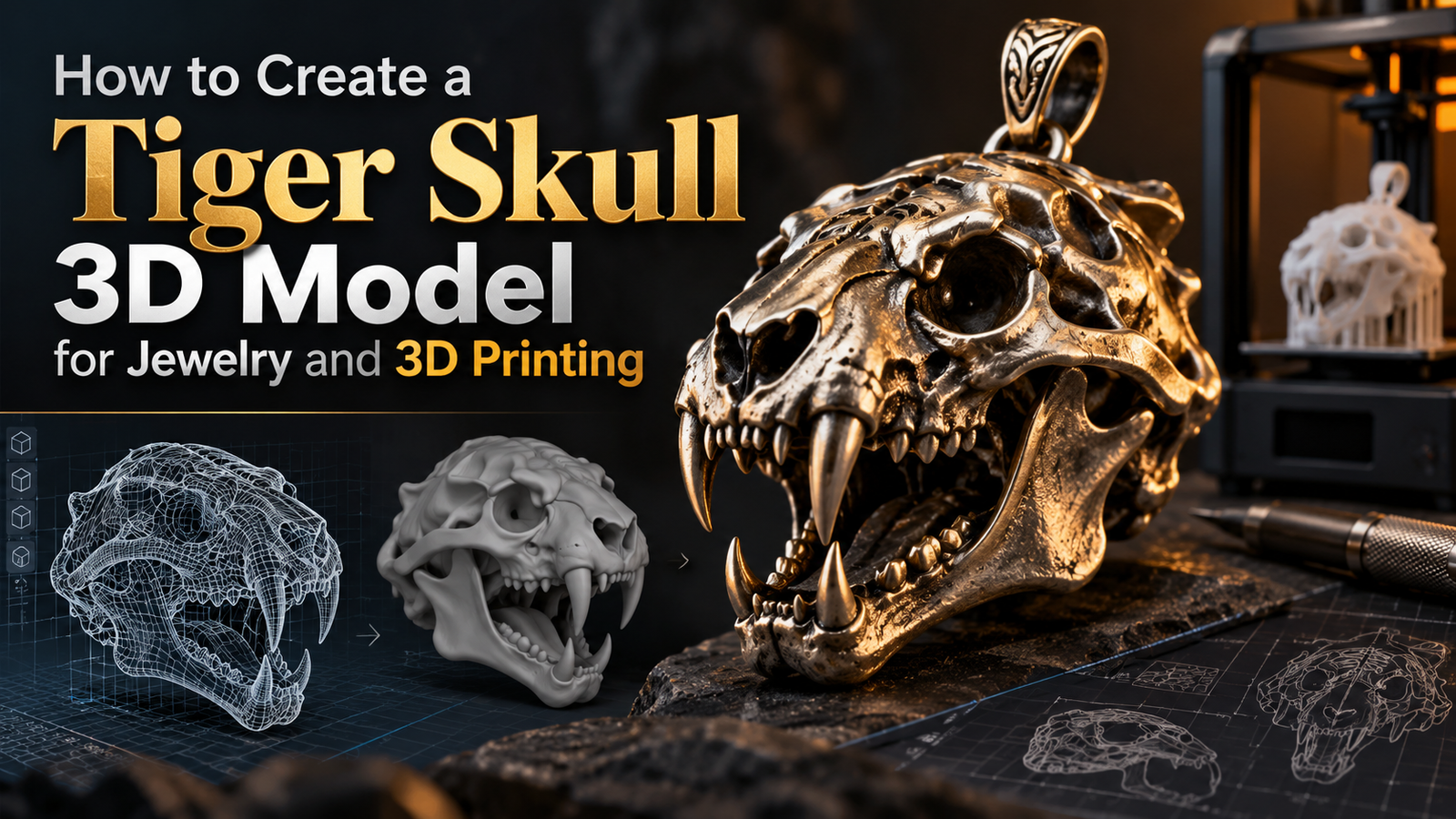
A tiger skull 3D model combines the power of a tiger, with the intricacy of a skull to create an interesting concept idea for jewelry designers, 3D artists and manufacturers. The creation of such a model poses special attention to anatomy, proportions, surface details, and production requirements to deliver a visually appealing design, while being convenient for printing. Be it a statement pendant, ring, decorative piece, or a collectible – a 3D model will allow its owner to take their digital concept to life.
For the application in jewelry, as well as the manufacturing industry – the design requires special attention to detail while preserving engineering accuracy. Such elements as eye sockets, jaw, teeth, cheek bones and nasal cavity need to be recreated in a way, which will not compromise the structural integrity of the printed piece. At the same time, a professionally prepared tiger skull 3D model can be scaled and adapted for use, opening creative opportunities for a designer.
Understanding the Structure Before Modeling
The very first step before actually building a model is learning the major anatomy features of the tiger skull. Having a visual reference or an anatomy model will assist the designer in estimating the general proportions of a skull and identifying the major bone structures. A tiger skull, compared to a generic animal skull will have certain facial features, which should be recreated to match the reference image or model. Studying multiple references from different angles will enable the designer to build not a generic tiger skull – but a three dimensional tiger skull to match the concept idea.
When creating a jewelry piece, the model should incorporate some design features, such as a sculpted surface or additional elements. A pendant or a ring in the shape of a tiger skull will not always incorporate minute anatomical details in its actual size, as they would not survive the production process. This is when a designer’s experience and product knowledge come into play, as they should estimate what anatomical features can be sculpted and which will have to be simplified for the sake of manufacturability. Thus, a 3D model of a tiger jewelry piece can be stylized, but retain its iconic look.
Choosing the Right 3D Modeling Approach
The approach to 3D modeling will vary depending on the application and intended use of the model. For CAD software, the focus will be on the production-ready end result – the dimensions, symmetry, and production requirements. For sculpting software, the approach will be different – the designer will strive to create realistic anatomy with the help of sculpting tools, to recreate authentic bone texture. In practice, many designers use both sculpting and CAD software, to build a model, which combines the realistic surface details and production-ready elements.
A competent approach to 3D modeling will suggest sculpting the major elements of the skull first, before estimating the minor elements and adding new layers of detail. The cranium, jaw, nasal cavity, cheek bones and eye sockets will form the basic structure of the tiger skull, which will then be used as a basis for teeth details, bone texture and additional sculpting elements. It is vital to focus on the bigger picture to avoid getting obsessed with the smallest anatomical detail.
Key Elements to Focus on During Modeling
During the process of 3D modeling, several structural and visual details of the tiger skull should be given special attention, to create a model of a skull, which will serve its purpose.
- Skull proportions: Determine the general dimensions and balance the facial proportions of the tiger skull model.
- Jaw and teeth thickness: Create a defined look for the jaw to ensure that teeth are not too thin.
- Eye sockets: Carve the eye sockets structure to create dimension, but avoid thin walls.
- Bone texture: Add realistic elements to recreate authentic aged bones.
- Production thickness: Add thickness to fragile elements before printing, casting or machining.
- Connection loops: Add loops or connection spots when designing pendants, rings or other jewelry pieces.
These details are of particular importance when creating a 3D printable tiger skull model – as a complex visual design might require optimization prior to being printed on a 3D printer, to ensure that every thin edge or protruding element will not break during the production process.
Preparing the Model for 3D Printing
Once the design is done, it is necessary to check it for the chosen printing method. Resin printing will preserve all the details, but other methods require the creation of large surfaces and thick walls. It is essential to verify the file for errors such as non-manifold geometry, disconnected surfaces, and other issues. A 3D skull model for printing also needs to consider the scale and level of detail. If the designer wants to create a large skull as a decorative element, the model will have various details at a scale that would be impossible to print at a jewelry size. In this case, for a ring or pendant, some of the elements will have to be simplified, and some parts will be made more robust. Checking the model in the final stage is vital, as many design details are not visible at the preview size on the computer.
Turning the Design Into Jewelry
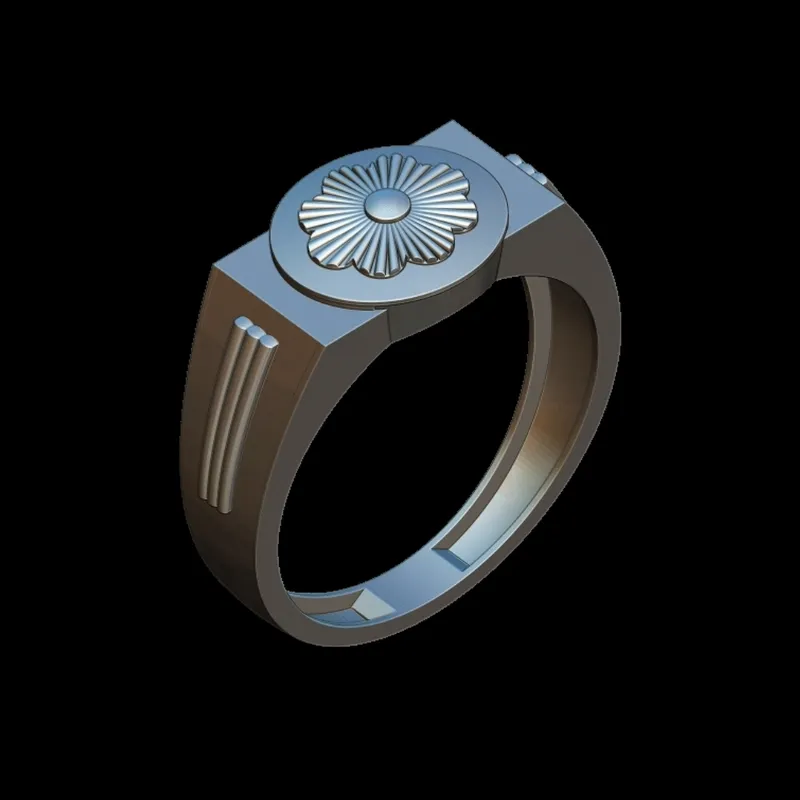
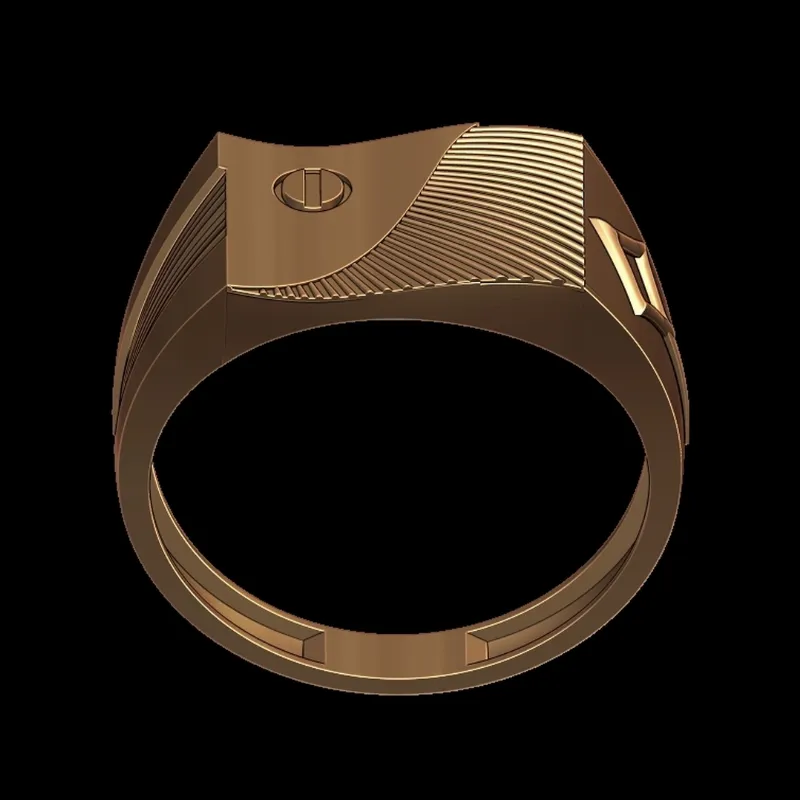
If the designer wants to make a skull out of jewelry, this modeling stage will have to be more accurate to consider the placement and size of the jewelry elements. If the jewelry is a pendant, it must have a bail or loop; for a ring, the skull must be adapted to fit within the ring shank. The designer also needs to consider how finishes and casting processes will affect the intricate skull details. A tiger skull 3D CAD model can be used to make various jewelry pieces, from pendants and rings to earrings and bracelets. It depends on the designer and the desired effect, as well as the chosen production method for the jewelry. The same tiger skull 3D model design can be adapted to different sizes and various types of jewelry. This eliminates the need to redesign the model from scratch for each piece of jewelry.
How CadWala Helps With 3D Jewelry Models
Designing a complex skull from scratch takes a lot of effort and knowledge of production engineering, which not all designers have. Thus, designers and manufacturers who do not have the skills or time for such projects can usefully employ ready-made 3D jewelry models and STL files for the tiger skull. The designer can also use the resources of the organization to develop their own jewelry skull design, using the existing 3D CAD file as a basis. Thus, this model can be used not only for designers who want to create their own concept but also for those who lack the time and knowledge for complex 3D modeling. This skull in CAD can also be used to make 3D printed jewelry skulls. Using pre-made jewelry skull designs can reduce the time spent on modeling and allow the designer to focus on other issues, such as finishing, size, and production engineering. Depending on the design and intended use of the model, various changes can be made to the design before 3D printing it.
How to Use a Skull 3D Design for Different Applications
A skull 3D design can serve for many purposes beyond just jewelry. The designer can change the size, orientation, surface structure, and other details of the skull model to obtain different variations of this model. The designer needs to understand that this is a design for 3D printing, which means that it has to consider the characteristics of the chosen technology. For example, the same skull can become a pendant if it is given a bail and the right size, as well as serve as a basis for a ring or pendant. A larger model can also be used as a display or novelty item, as well as be adapted for production as a prototype. Thus, designing the skull in 3D is also a creative process in which the designer explores the possibilities of this model.
Finalizing and Exporting the Model
Before exporting the file, it is necessary to do a final inspection. In this stage, the model should be checked from different angles for problems, and all the essential details must be present in the file. It is also necessary to delete any unnecessary geometry and check the model’s surfaces for gaps or other flaws. The model’s thickness also needs to be checked and, if necessary, changed for the chosen method of processing. When preparing the tiger skull CAD model STL file for printing, it is necessary to pay attention to all the details of this file and make the necessary changes for the chosen method and material. The file format also needs to be converted to STL if it is not already in this format because this is the standard for 3D printing. Different printing technologies also have different requirements for files, so it is important to research and understand what details need to be modified before printing.
Why Detailed 3D Skull Models Matter for Production
A digital 3D model helps realize the idea fully since it allows you to think through all the nuances of proportionality and detail. In addition, when creating a multi-scale model, a designer has an opportunity to make changes to the geometry, paying attention to all the details of the design. This is especially important for jewelry, where a small change in detail can greatly affect the appearance of the finished product. This also highlights the importance of taking into account the final stage and the chosen printing method when creating this model. A designer can also make several variations of the skull model, changing the level of detail and scale, and thus have more options for use and production.
The creation of such a detailed model of a tiger skull also saves time and effort when preparing the design for printing. The designer only needs to make minor adjustments to the model before printing so that it is suitable for the chosen method. If the designer wants to make a product that will be used in the jewelry industry, this model can be used not only for printing but also for other technologies. In the end, it is always worth thinking about the design’s final appearance and how it will look at a particular scale, using the 3D modeling program.
Conclusion
The creation of a detailed tiger skull design implies the study of anatomy, the accurate depiction of certain qualities inherent in this animal, and the study of the intricacies of geometry in relation to the chosen technology. All this is necessary to ensure that preparing the design for printing is as smooth as possible, regardless of the purpose of the model. Whether it is jewelry, sculptures, or novelty items, the creation of such a project involves many steps and details, and designers need to take all of them into account to achieve the best result.
If a designer wants to create a detailed skull design for 3D printing and jewelry, using the existing ready-to-use 3D CAD and STL files will save them time and effort. Thus, using the 3D model file for the tiger skull, the designer can focus on other aspects of design while creating their own unique product.