2026-10-01 04:05:05
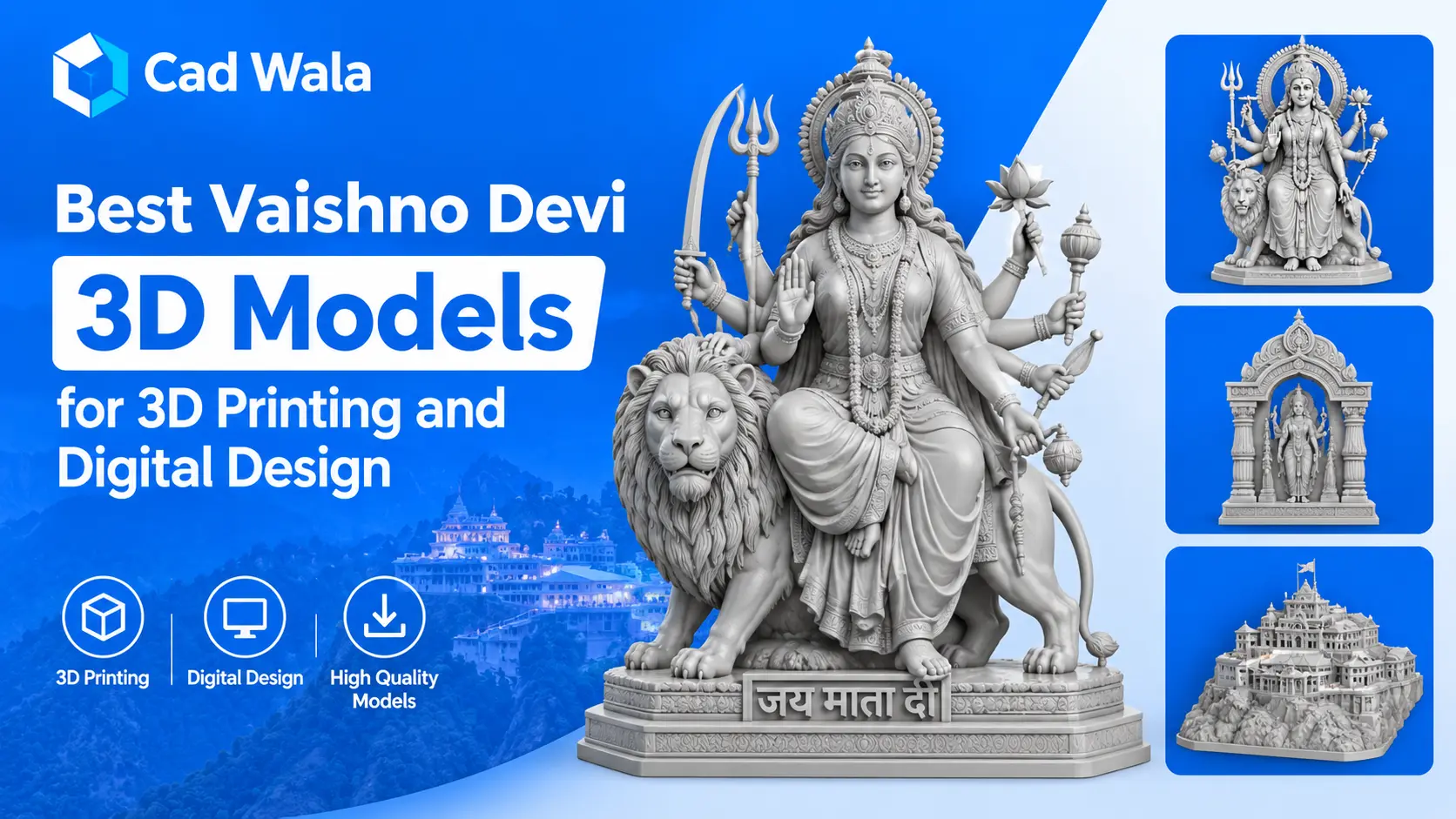
Best Vaishno Devi 3D Models for 3D Printing and Digital Design
Best Vaishno Devi 3D Models for 3D Printing and Digital Design
Vaishno Devi 3D Models are useful for designers, 3D printing enthusiasts, artists, manufacturers, and devotees who want to create detailed digital or physical representations of Mata Vaishno Devi. From decorative pieces to detailed digital designs, these models can be adapted for many creative and manufacturing projects.
Imagine opening a 3D design file and seeing the familiar form of Mata Vaishno Devi taking shape on your screen. You can rotate it, inspect the small details, adjust its size, and prepare it for printing. For many designers, this is where a simple idea turns into a physical model.
Today, 3D modeling makes it easier to create religious sculptures, decorative objects, digital artwork, and customized products. However, choosing a suitable model requires attention to detail, file quality, printability, and the intended use.
What Are Vaishno Devi 3D Models?
Vaishno Devi 3D Models are three-dimensional digital representations created using specialized 3D modeling software. Unlike a flat photograph or drawing, a 3D model contains depth and can usually be viewed from different angles.
Depending on how the model is designed, it can be used for:
- 3D printing
- CNC machining
- Digital visualization
- Product design
- Decorative sculptures
- Architectural displays
- 3D animation
- Customized religious artwork
A well-made model should have clean surfaces and enough detail to represent the subject clearly. The right level of detail also depends on the final size of the physical product.
Choosing a Vaishno Devi 3D Model for Your Project
Before downloading or purchasing a vaishno devi 3d model, think about what you actually want to create. A model designed for a large decorative statue may not work well for a small desktop print.
For example, if you are creating a small decorative piece, extremely tiny details may disappear during printing. On the other hand, a large statue may require a model with much more surface detail.
You should also check the file format. Common 3D printing formats include STL and OBJ, while designers may use other formats depending on their software and workflow.
Pay attention to:
- Model dimensions
- Surface details
- File format
- Mesh quality
- Wall thickness
- Support requirements
- Compatibility with your software
- Intended printing method
Taking a few minutes to check these points can save you from problems later.
Maa Durga 3D Model and Related Religious Designs
A maa durga 3d model can be useful when you are working on a collection of Indian religious designs. Many artists and designers create related models featuring different forms, poses, ornaments, and decorative elements.
Although each religious figure has its own visual identity, the same 3D design principles apply. Details such as clothing, jewelry, facial features, posture, and surrounding elements need to be modeled carefully.
For digital artists, these models can also become part of larger scenes. A designer might create a temple-inspired environment, decorative background, or digital presentation around the main model.
This makes 3D modeling more than just a way to make a printable object. It can become a complete digital design process.
What Makes a Good Vaishno Devi 3D Printing Model?
A Vaishno Devi 3D Printing Model needs to be more than visually attractive. It also needs to be practical for the intended manufacturing process.
A model may look perfect on a computer but still create problems when sent to a 3D printer. Thin sections, unsupported areas, disconnected parts, and complicated surfaces can affect the final result.
Before printing, designers should inspect the model for common issues. The mesh should be properly closed, and the geometry should be suitable for the chosen printer.
For resin printing, designers can often achieve very fine details. FDM printing, meanwhile, may require more attention to layer height, supports, and minimum feature size.
The final result can also change depending on the material. PLA, resin, ABS, and other materials each have different printing characteristics.
Mata Vaishno Devi 3D Model for Digital Design
A Mata Vaishno Devi 3D Model can also be used without creating a physical object. Digital designers can use 3D models for presentations, illustrations, animations, virtual environments, and product previews.
This is especially useful when a customer wants to see what a product could look like before manufacturing begins.
For example, a designer could place the model into a digital temple setting and create realistic lighting around it. Another designer could create different sizes or viewing angles for a product catalog.
Because the model exists digitally, changes can often be made before any material is used. This can reduce unnecessary physical prototypes and give designers more flexibility.
How Vaishno Devi 3D Models Are Prepared for Printing
Preparing Vaishno Devi 3D Models for printing usually involves several stages.
First, the designer checks the geometry and removes unwanted errors. Next, the model is scaled according to the required dimensions. The orientation is then selected based on the printer and the shape of the model.
After that, the model is usually placed into slicing software. The software converts the 3D design into instructions that the printer can understand.
The designer can then adjust settings such as:
- Layer height
- Infill percentage
- Print speed
- Supports
- Wall thickness
- Printing temperature
- Resolution
A small decorative model may take only a few hours, while a large and detailed piece can require considerably more time.
Mata Vaishno Devi 3D Printing Manufacturing
Mata Vaishno Devi 3D printing manufacturing combines digital modeling with modern production methods. It can be useful for creating prototypes, decorative products, customized pieces, and small-batch designs.
The manufacturing process begins with the digital model. Once the file is checked and prepared, it can be sent to a suitable 3D printer.
For larger pieces, the model may be divided into multiple sections. These sections can be printed separately and assembled afterward. This approach can make large designs easier to manufacture.
Post-processing is another important stage. Depending on the material, the printed object may need sanding, cleaning, curing, painting, or other finishing work.
The final appearance therefore depends not only on the original model but also on printing and finishing techniques.
How to Select the Right Vaishno Devi 3D Models
There is no single model that works perfectly for every project. Your choice should depend on your purpose.
If you want to make a small decorative print, look for a model with clear features that remain visible at a smaller scale. If your goal is a large sculpture, focus more on geometry, surface quality, and how easily the model can be divided into printable sections.
For digital design, file compatibility and polygon quality may be more important than printing considerations.
When comparing Vaishno Devi 3D Models, ask yourself:
- What will I use the model for?
- What size will the final object be?
- Which printer or manufacturing method will I use?
- Does the file work with my software?
- Does the model contain enough detail?
- Can the model be edited if required?
Answering these questions makes the selection process much easier.
Why Detailed 3D Models Matter
Detail is one of the first things people notice when viewing a religious 3D design. Fine features can give the model a more finished and realistic appearance.
However, more detail is not always better. Extremely complex geometry can make a file harder to edit, process, or print.
The goal should be useful detail enough information to create the desired appearance while keeping the model practical for its intended purpose.
For manufacturers and designers, this balance can make a major difference. A clean and well-structured model is easier to prepare for different production methods.
Bringing a Digital Design Into the Physical World
One of the most interesting parts of working with Vaishno Devi 3D Models is seeing a digital design become a physical object.
The process can start with an idea, continue through digital sculpting and modeling, and finish with a printed piece. Each stage gives the designer an opportunity to improve the result.
Whether you are a professional 3D artist, a manufacturer, or someone exploring 3D printing as a hobby, choosing a suitable model is the first important step.
A good model gives you a strong foundation. From there, you can adjust the scale, material, finish, and presentation according to your project.
Final Thoughts
Vaishno Devi 3D Models have applications across 3D printing, digital artwork, manufacturing, product visualization, and customized design. The best choice depends on what you want to create and how you plan to use the final model.
Before starting a project, check the file quality, dimensions, compatibility, geometry, and printing requirements. A little preparation can help you avoid common problems and achieve a cleaner result.
Whether you are exploring a vaishno devi 3d model for a digital project or preparing a Vaishno Devi 3D Printing Model for manufacturing, a carefully selected and properly prepared design can make the entire process smoother.
Frequently Asked Questions
1. What is a Vaishno Devi 3D Model used for?
A Vaishno Devi 3D Model can be used for 3D printing and digital artwork. It is also useful for product visualisation, animation, CNC projects, and customised decorative designs. Its use depends on the file quality and intended application.
2. Can I use a Maa Durga 3D Model for digital artwork?
Yes, a maa durga 3d model can be used for digital artwork, visual presentations, animations, and other creative projects when the model's license allows the intended use.
3. What file formats are commonly used for a Vaishno Devi 3D Printing Model?
A Vaishno Devi 3D Printing Model is commonly provided in formats such as STL or OBJ. STL is widely used for 3D printing, while OBJ can be useful when color, texture, or additional mesh information is needed.
4. How detailed should a Mata Vaishno Devi 3D Model be?
A Mata Vaishno Devi 3D Model should have enough detail for its intended size and manufacturing method. Very small prints need simpler, stronger details, while larger sculptures can support more intricate features.
5. What is involved in Mata Vaishno Devi 3D printing manufacturing?
Mata Vaishno Devi 3D printing manufacturing involves preparing the digital model, checking its geometry, scaling it, slicing it, printing the parts, and completing any required post-processing such as cleaning, sanding, curing, or painting.