2026-09-17 08:09:39
3D Jewelry Rendering Services: How Designers Create Photorealistic Jewelry Images
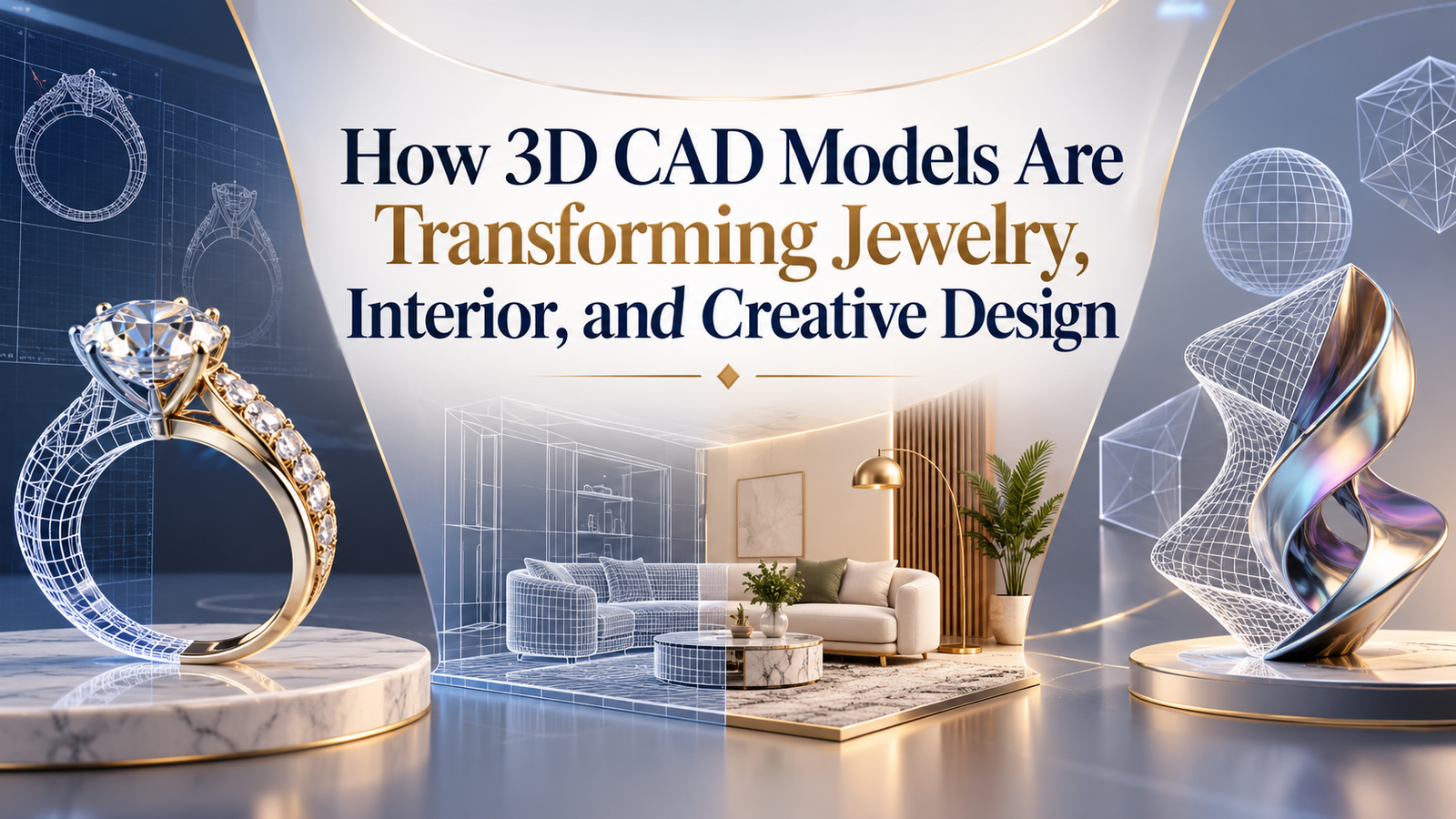
The 3D jewelry rendering service has become an essential tool in the jewelry design ecosystem, supporting brands, manufacturers, retailers, and independent designers to visualize their creations in photo-real digital mockups before entering production and prototyping. In place of photographs and hand sketches, designers utilize powerful 3D modeling and rendering software to design jewelry in computer graphics, apply materials, and create a visual image of a finished product that can be featured on a website, in a catalog, in an advertisement campaign, a client approval, or a custom jewelry presentation.
Designing a piece of fine jewelry involves working with complex geometry, so a digital image rendering of a jewelry item requires more than just an outline of the item; the designer must strive to capture the look, materials, lighting, and reflection to recreate an image of a real-life jewelry product. Moreover, the jewelry product rendering in 3D helps jewelers and designers to communicate their idea clearly and confidently, reducing risks associated with prototype creation and production. With the right approach and know-how, a professional renderer can execute a digital image simulating a real photograph and help a jewelry business to scale its presentation and offerings.
What Is 3D Jewelry Rendering?
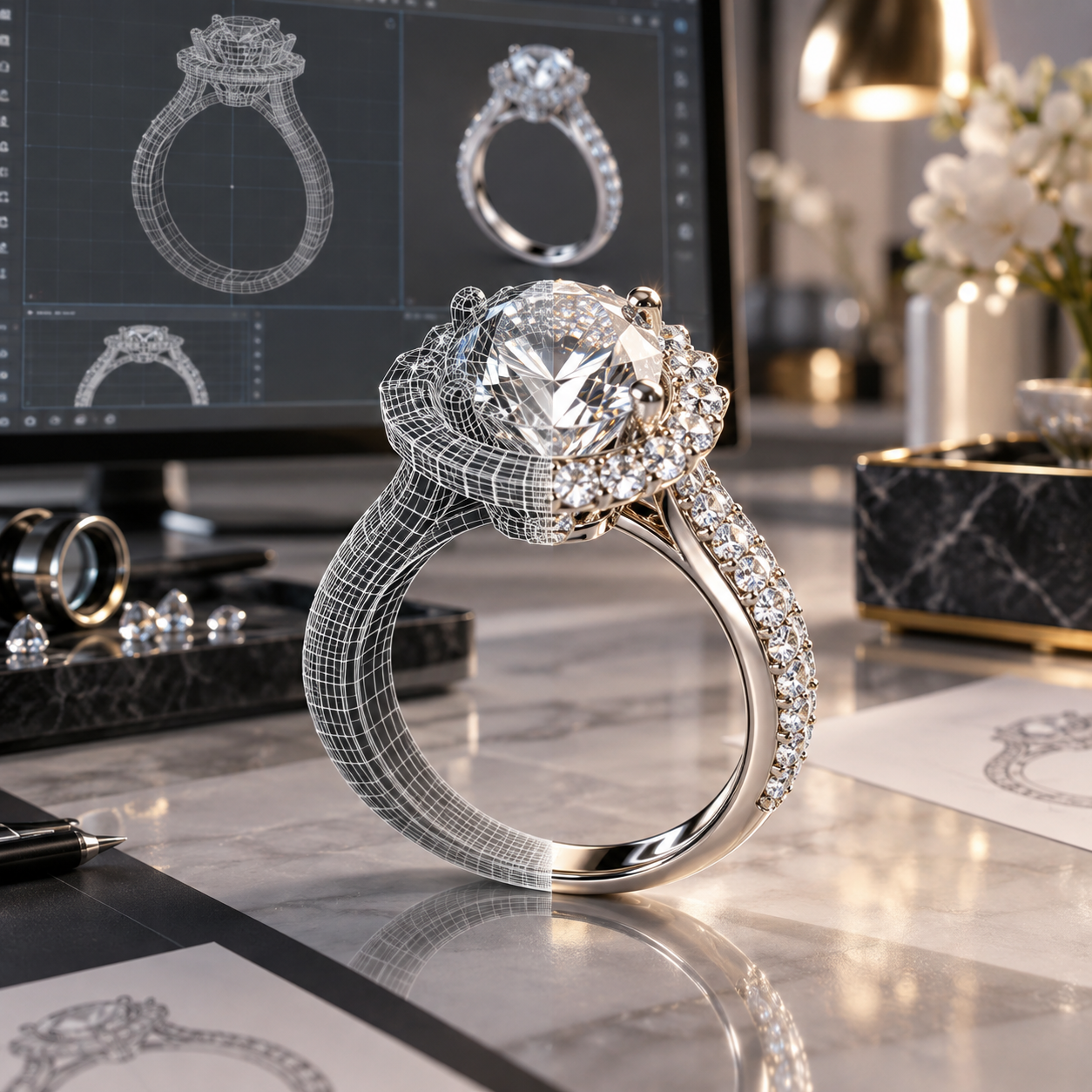
3D jewelry rendering service is a process of digitally painting a 3D jewelry model to create a visual image simulating a real photograph. The model can be a ring, a necklace, a bracelet, earrings, a pendant, a bangle, or a custom jewelry detail. A designer or a renderer takes the computer graphics model and paints it with the desired materials, lighting, texture, shadows to be viewed in the selected camera angle, resulting in a visual image equivalent to a photography studio shot.
The main goal of a 3D rendering and texturing process is to create a digital image that represents a real-life jewelry item. Thus, a designer can present a piece of jewelry with a gold or silver surface, platinum, diamonds, color gemstones, enamel, and other details in a computer image close enough to the real materials. This approach is a useful tool for the jewelry industry, enabling businesses to show their client exact items digitally before cutting and polishing precious metals and gemstones.
Moreover, jewelry product rendering in 3D is a vital tool for an ecommerce business to showcase its jewelry products. With 3D software, a designer can create multiple visual images of a jewelry item in different colors, styles, and sizes to represent a product catalog effectively. An image of a silver ring can be repainted in yellow or rose gold, and multiple variations of a jewelry item can be presented without the need to create physical samples.
How Designers Create Photorealistic Jewelry Images
The image rendering process begins with a 3D jewelry model with precisely defined geometry. The accuracy of a 3D model affects the final image quality. If the model structure is incorrect, the image of a rendered jewelry item may appear distorted even if all the materials and lighting are correctly implemented.
Depending on a project’s scope, a designer can build a 3D model from a technical drawing, a reference, a sketch, or a technical specification (CAD). Sometimes a designer receives a model from a jewelry CAD specialist and only needs to paint the model, define materials, lighting, and camera position to simulate an image of a real jewelry item. In other cases, a designer works on a 3D model from scratch, building geometry, materials, and texture for a jewelry piece. Creating a realistic image of a jewelry item typically involves the following steps:
- Building a 3D Jewelry Model
Before rendering a model to create a photorealistic image, a designer needs to build or prepare a 3D model. The designer must follow a standard set of guidelines regarding a piece’s dimensions, surface roughening, and material properties (e.g., density) to control the way light interacts with a jewelry item. For example, the model of a ring must have an accurate cross-section of a ring band and gemstone notches, and a designer must define the correct placement of metal shanks, prongs, or chain links. Fine jewelry involves a high level of detail, and each edge must be precisely shaped to meet real-life proportions and meet manufacturing standards.
Depending on the project’s requirements, a designer can work on a model of a ring, a pendant, or a complex gemstone setting. The designer must also consider a piece’s functionality, such as the opening mechanism of a necklace clasp or a bracelet, or a ring size that corresponds to a customer’s digit. An accurate 3D model helps to control the image quality in the next stages of rendering and ensures that a prototype can be manufactured correctly after the design is finalized.
- Detailing and Surface Quality
A designer will work on the model details and surfaces to achieve an accurate image of a fine jewelry item. Fine jewelry has many intricate features, and a designer must precisely define model elements not visible in the final image. For example, a ring made of gold metal with a precious gemstone setting will have engraved patterns, beveled edges, and a correct gemstone seat to ensure that a diamond or sapphire is placed perpendicularly to the ring shank. A designer will utilize appropriate modeling tools to achieve photorealistic image quality. For instance, a circular ring band with an open center will have beveled edges to control the way the ring reflects light. Excessively detailed digital geometry can also ruin an image, so a designer typically removes unnecessary model geometry in the image processing stage.
A designer will also consider the model’s scale when rendering an image. The same 3D model of a ring in 1:1 scale will look different when rendered in a 3:2 scale. Moreover, image resolution is also vital in jewelry rendering, as the final image size is often larger than a standard social media image. Thus, a luxury jewelry brand may need a higher image resolution for a product catalog page than an ecommerce website.
- Material Definition
Materials play a significant role in 3D jewelry rendering since a variety of elements must be defined to simulate an image of a real jewelry item. For example, gold, silver, platinum, diamonds, color gemstones, and enamel have specific material properties that determine an image’s reflection, transparency, roughness, and other characteristics. A designer will utilize appropriate materials to achieve the desired result. Denser materials, such as platinum or diamonds, will reflect light stronger than gold, silver, or enamel. A correct balance of materials and lighting will impact an image’s overall quality, so a designer typically uses references to recreate a product photography image with real jewelry.
Material selection is also vital to represent a jewelry item’s color variations, such as white, yellow, and rose gold, and to show different gemstone colors. Thus, a designer can repaint the same ring model in white, yellow, and rose gold to illustrate a product’s variation.
- Lighting and Reflections
Lighting is one of the most critical factors in jewelry image rendering since lighting defines how an object appears in an image. A jewelry designer will recreate a photography studio setup to control an object’s highlights and shadows and ensure the object’s color and shape are clearly defined. Jewelry items often require special lighting conditions since a ring, for example, has reflective surfaces that will display undesirable shadows if the light source is placed incorrectly. An effective lighting setup will also showcase a jewelry item’s unique characteristics, such as an item’s intricate patterns or gemstone arrangement. Moreover, proper lighting and shadow will control an object’s scale and perspective within the image. Overall, the image lighting is especially important for an ecommerce website since a customer will base a buying decision on an image.
An image of a jewelry item may also utilize reflection cards and area lighting to recreate the color and lighting conditions of a real photography studio. Additionally, different types of lighting, such as soft boxes, can be used to create desirable shadows and spots to highlight unique characteristics of a piece.
- Camera Angle and Composition
The camera angle is essential to showcase a jewelry item’s beauty, so a designer will choose the most attractive perspective to visualize the image. Some pieces, such as a ring, can be visualized in a standard front-on camera view, while more complex items, such as a bangle, will need a 3-quarter perspective. Certain details, such as an item’s gemstone arrangement or intricate patterns, will require a close-up view or a separate image.
A designer will also pay particular attention to the product image background, item placement, and the image’s overall composition. An image of a jewelry item will typically utilize a simple background to ensure that colors of a piece stand out against the background colors. An ecommerce product page, however, will have a fixed product image size, so a designer must arrange the image composition to fit the website’s requirements or utilize a square product image with a solid background for social media. For instance, a marketing image for an ecommerce catalog page may utilize a contrasting background color to make a product stand out, while a social media post will use a different product image size and background color.
- Image Rendering, Review, and Post-processing
After the model is built and painted with specific materials, a designer will select a file resolution and a camera angle to create a digital image. For complex jewelry items, image rendering can take a few hours or even days.
A designer will examine the rendered image to identify inconsistencies and utilize image editing software to improve the image quality and perform post-production tasks. Thus, an image of a piece with gemstones will benefit from additional reflection and highlight tuning to create a desirable look.
Benefits of Professional Jewelry Rendering
Professional image rendering offers various benefits to jewelry designers, businesses, and brands. A designer can utilize image rendering to present a product concept to a client confidently and receive project approval. Image rendering will also allow a designer to make adjustments without creating additional prototypes with real metals and gemstones. Additionally, a designer can provide high-quality product images for marketing, social media, advertisements, and product catalog pages. An image rendering service also helps to visualize a product variation, such as different item sizes, gemstone colors, and metal finishes.
Thus, a brand can showcase its jewelry offerings with high-quality digital images and provide visual information about products to interested clients. The designer can provide visual images of a ring in white metal and yellow gold, a pendant in a range of gemstone colors, or a bangle in different sizes to support the client’s decision-making.
Moreover, jewelry product rendering in 3D will help to facilitate communication between a designer, manufacturer, retailer, and customer since an image will convey more information than a technical drawing. The image will indicate what materials were chosen for a piece of jewelry and how the final product will look in real life. Thus, everyone involved in a jewelry project will have a clear idea and reduce risks associated with misinterpretation of technical specifications.
Image rendering is also beneficial for custom jewelry pieces since clients can review an image of a piece before manufacturing. Thus, a customer will be able to request modifications to a design without waiting for a physical sample to be produced.
Finally, 3D CAD jewelry design modeling and image rendering services provide an opportunity to create a digital mockup of a jewelry item. The digital file can be utilized in a range of applications, including animation, product design visualization, computer-aided manufacturing (CAM), and 3D printing.
How CadWala Helps Jewelry Design Projects
CadWala offers a wide range of digital jewelry design products and resources to support jewelry designers, independent jewelers, 3D printing enthusiasts, and manufacturers. For instance, the website provides jewelry CAD models and jewelry design files that can be utilized for reference, customization, visualization, and production, depending on a file type and project requirements. Thus, an independent jewelry designer searching for a traditional jewelry style reference will explore 3D Chandrabali Earring STL File Download and analyze the model to use it as a design inspiration or a production file. A designer will also consider STL file dimensions, material, geometry, and wall thickness before utilizing a file for 3D printing.
The wide range of digital jewelry resources offered by the website can also be beneficial for jewelry design education, enabling students to learn the intricacies of fine jewelry design. Moreover, a jewelry 3D printing service can utilize a file as a reference to create a 3D printed jewelry model or modify it to meet the project requirements.
However, it is important to remember that a high-quality 3D printing model and an image rendering service require technical expertise and time to achieve a high-quality result. Thus, a jewelry designer will examine all elements of a file, including gemstone settings, model measurements, file format, and wall thickness, to ensure that the image of a piece can be rendered in high resolution and 3D printed effectively.
Two Practices to Better Jewelry Rendering
Use accurate models and references: Photo-realistic image rendering requires a designer to utilize an accurate 3D jewelry model and high-quality references. A designer will ensure that a piece’s gemstone settings, model dimensions, and visual appeal match the intended design concept. A designer will also consider technical specifications of a jewelry item and manufacturing standards to guarantee that a prototype can be produced from a digital file.
Match lighting and materials to the product presentation: The designer will choose image background, lighting, and materials according to a jewelry item’s final application (social media, product catalog, etc.) and project requirements. An image of a fine jewelry item will utilize an appropriate product photography setup to recreate an image of a real jewelry item. A designer will also make sure that materials and gemstone colors are rendered realistically to achieve an accurate image.
How to Choose a Jewelry 3D Rendering Service Provider
A jewelry business will choose a rendering service provider based on its portfolio, technical expertise, file format requirements, background and experience, project timeline, and communication preferences. A rendering service provider with extensive experience across different jewelry product categories and a strong portfolio can offer valuable insight into the project and produce high-quality product images.
A jewelry business will also consider a service provider’s experience with different file formats and image resolution since the project may call for a specific image size and background. The business will communicate its requirements for image rendering, including model file format, background, number of image views, image resolution, and editing options.
A reliable service provider will understand the requirements for a jewelry image, the importance of accurate materials and gemstone presentation, and the desired project outcome. An effective communication channel between a rendering service provider and a jewelry business is vital to ensure that all details, such as gemstone size, metal color, and image background, are considered during image rendering. Thus, it may be helpful to review sample images before approving an order to ensure that there is agreement on the final image outcome.
Conclusion
Professional 3D jewelry rendering service offers valuable support to jewelry designers and businesses by transforming digital files into photo-realistic images. With a combination of accurate 3D jewelry modeling, smart image details, realistic materials, and appropriate lighting, an image of a jewelry item can simulate a real photography image. A designer will use image editing and post-production tools to reinforce an image and bring it to the desired quality. From the jewelry product visualization to the downloadables, digital design resources help create effective jewelry design concepts and reduce the need for physical proofs.