2026-10-16 04:05:05
Saraswati 3D Models for CNC Carving, 3D Printing & Home Decor
Saraswati 3D Models for CNC Carving, 3D Printing & Home Decor
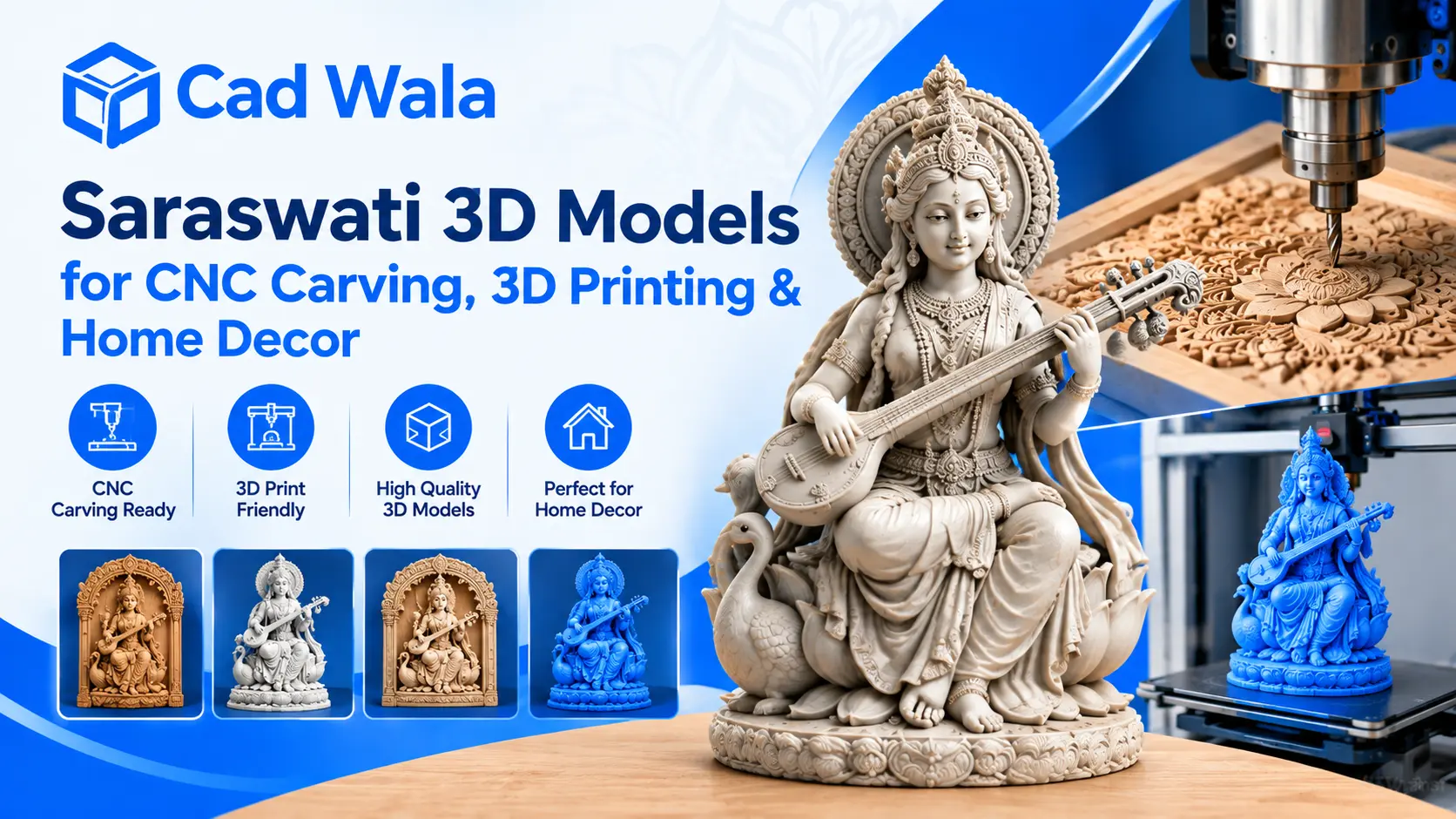
Saraswati 3D Models are a great choice for artists, designers, manufacturers, and devotees who want to create beautiful representations of Goddess Saraswati for carving, 3D printing, and home decoration. Whether you are planning to make a decorative wall panel, a traditional wooden carving, or a detailed idol, a well-designed 3D model can help you bring your ideas to life.
Goddess Saraswati is widely worshipped as the deity of knowledge, wisdom, music, and learning. Her traditional appearance, often featuring a veena, a book, a lotus, and a swan, makes her an inspiring subject for artistic work. With modern digital design tools, these traditional elements can be turned into detailed models that are suitable for different creative projects.
If you are a CNC operator, 3D printing enthusiast, sculptor, or home decor designer, choosing the right digital design can save time and help you achieve a more professional result. In this guide, you will learn how to select, prepare, and use Saraswati models for different applications.
What Makes Saraswati 3D Models Useful for Modern Design?
Traditional religious artwork often requires careful attention to facial features, ornaments, clothing, and symbolic objects. Creating every detail from scratch can take considerable time, especially when the final design needs to be reproduced more than once.
Saraswati 3D Models provide a digital starting point for this work. Instead of drawing every feature manually, you can work with an existing three-dimensional design and adjust it to suit your project.
For example, a furniture maker may want a decorative Saraswati panel for a wooden cabinet, while a designer may need a small idol for a home temple. Both projects can use the same general subject, but the final model will need different dimensions, levels of detail, and production settings.
A good model should offer:
- Clear facial features and well-defined ornaments.
- Balanced proportions and recognizable traditional symbols.
- Suitable depth for carving or printing.
- Enough detail to look attractive at the intended size.
- A file format compatible with your design or manufacturing software.
These features help you turn a digital concept into a physical piece of artwork.
Saraswati 3D Model for CNC Carving
A Saraswati 3D model for CNC carving is useful for creating decorative panels, wooden plaques, temple doors, furniture designs, and wall art. CNC machines follow digital toolpaths to remove material from wood, MDF, stone, or other suitable materials.
For example, imagine a carpenter who wants to create a Goddess Saraswati panel for a school entrance or a home prayer room. A suitable 3D relief can help the carpenter reproduce the goddess's facial details, veena, clothing, and decorative background with greater consistency.
Before selecting a model for CNC work, consider the following points.
- Check the relief depth: Relief designs have raised and recessed areas. A design with suitable depth can produce a visible three-dimensional effect without making the panel unnecessarily thick.
- Look at the small details: Thin jewellery, fingers, facial lines, and the strings of a veena may be difficult to machine accurately. Check whether the details are large enough for the cutter and the final panel size.
- Choose the right material: Wood is often preferred for traditional decorative work, while MDF can be useful for certain interior applications. Stone and other materials may require different tools and machining settings.
- Prepare the toolpath carefully: A 3D model may need editing before it can be used in CNC software. Tool selection, cutting depth, machining strategy, and finishing all affect the final appearance.
Selecting a suitable model at the beginning can reduce unnecessary editing and help produce a cleaner carving.
Saraswati 3D Model for 3D Printing
A Saraswati 3D model for 3D printing allows you to create physical objects from a digital design by building them layer by layer. This method is useful for small idols, decorative statues, prototypes, and custom gifts.
Suppose you want to create a Saraswati idol for a study room or a personal collection. You can choose a digital model, adjust its dimensions, prepare the file in slicing software, and print it using a compatible 3D printer.
However, not every decorative model is ready for printing. Before starting, check whether the model has a suitable structure.
A printable model should ideally have a closed, watertight surface, no unwanted holes, and enough structural strength to support its features. Thin parts, such as the veena, fingers, or delicate ornaments, may require extra care.
You should also consider the printing material. PLA is a common option for decorative indoor models, while resin printing can capture fine details on appropriately sized pieces. The best choice depends on the printer, desired finish, object size, and intended use.
After printing, you may need to remove support structures, smooth rough areas, and apply paint or another suitable finish. These final steps can make the idol look more polished and bring attention to its finer details.
How to Choose the Right Saraswati 3D Design
A Saraswati 3D design should match the purpose of your project. A model created for a large wall panel may not be suitable for a small printed idol without some adjustments.
Start by deciding where and how you plan to use the finished piece. If you need a decorative panel, a relief design may be the best option. If you want a freestanding statue, look for a complete three-dimensional model with enough structural support.
Next, review the model's level of detail. Traditional features such as the veena, lotus, books, ornaments, and clothing folds can make the design more recognizable. However, extremely fine details may be lost when the model is reduced in size.
File compatibility is another important factor. Depending on the workflow, common formats may include STL, OBJ, and other mesh or CAD formats. Confirm that the file works with your software before purchasing or downloading it.
Finally, check the usage licence. Some models are available for personal projects only, while others allow commercial production. If you plan to sell carved panels, printed idols, or finished decorative products, make sure the licence permits your intended use.
Saraswati Idol 3D Model for Printing: Important Details to Check
A Saraswati idol 3D model for printing needs more than an attractive appearance. Its shape and structure must also suit the printing process.
For a freestanding idol, check whether the base is stable and whether the figure can stand securely after printing. A narrow base or a model with several unsupported sections may require modifications.
The size of the idol also matters. A small print may not preserve tiny ornaments or facial features, while a larger print may show more detail but take longer and use more material.
Pay attention to the veena and other projecting elements. These parts can be fragile, especially in small prints. Depending on the design, you may need to increase their thickness, change the print orientation, or use suitable supports.
If the model will be painted, consider how its surface will look after finishing. A smooth surface may be easier to paint, while deeper decorative details can help highlight the clothing and ornaments.
Before printing the final piece, making a small test print can help you identify problems and avoid wasting material.
Saraswati Relief Carving Design for Home Decor
A Saraswati relief carving design can add a traditional artistic touch to homes, educational spaces, meditation rooms, and prayer areas. Unlike a fully sculpted idol, a relief design is created on a relatively flat surface, with the figure raised above the background.
This makes relief artwork suitable for wooden wall panels, cabinet fronts, decorative doors, and framed religious artwork.
When selecting a relief, consider the size of the wall or surface where it will be installed. A large panel may allow more space for detailed ornaments and background patterns, while a smaller design usually benefits from simpler shapes and clearly defined features.
The background is also important. Floral patterns, lotus motifs, and ornamental borders can complement the central figure without making the design look crowded.
Material and finish can influence the overall appearance. Natural wood finishes can create a warm, traditional look, while painted finishes may suit modern interiors. The final choice should complement the surrounding furniture and decor.
For the best result, select a model with clear depth differences between the main figure and the background. This helps the design remain visible after carving, sanding, and finishing.
Common Mistakes to Avoid When Using Saraswati 3D Models
Even a detailed digital model may need preparation before production. Avoiding a few common mistakes can improve the final result.
- Choosing a model with excessive detail: Tiny features may disappear during small-scale printing or CNC machining. Match the detail level to the final dimensions.
- Ignoring file quality: Broken mesh surfaces, missing sections, or incompatible formats can create problems during production. Inspect the model before beginning.
- Overlooking the material: A delicate design that works in resin may not be strong enough for a thin wooden carving. Consider the properties of your chosen material.
- Skipping a test run: A small test print or sample carving can reveal issues before you spend time and money on the complete piece.
- Forgetting commercial permissions: If you intend to manufacture products for sale, review the model's licence and usage restrictions.
A little preparation can make the process easier and help you achieve a better finish.
Where Can You Use Saraswati 3D Models?
The applications extend beyond CNC carving and 3D printing. Depending on the design and file format, these models can support several creative projects.
- Home temples: Create decorative idols or panels for prayer spaces.
- Schools and libraries: Use Saraswati-inspired artwork in suitable educational interiors.
- Furniture decoration: Add relief carvings to cabinets, doors, and wooden panels.
- Custom gifts: Produce personalised decorative pieces for students, teachers, and art lovers.
- Art and design projects: Use digital models as references for sculpting, prototyping, or developing original artwork.
Always consider the intended setting, the strength of the finished object, and the model's permitted use before starting production.
Conclusion
Saraswati 3D Models bring traditional religious art and modern manufacturing methods together. Whether you want to create a CNC-carved wooden panel, print a detailed idol, or design decorative artwork for your home, the right digital model can make the process more manageable.
Focus on the model's quality, level of detail, file compatibility, material requirements, and intended use. With careful preparation and the right production method, you can create a finished piece that respects the traditional appearance of Goddess Saraswati while meeting your practical design needs.